We decided to get ourselves a caravan as a shelter on our plot as long as we do not have anything else to hide in. And yesterday, it arrived.
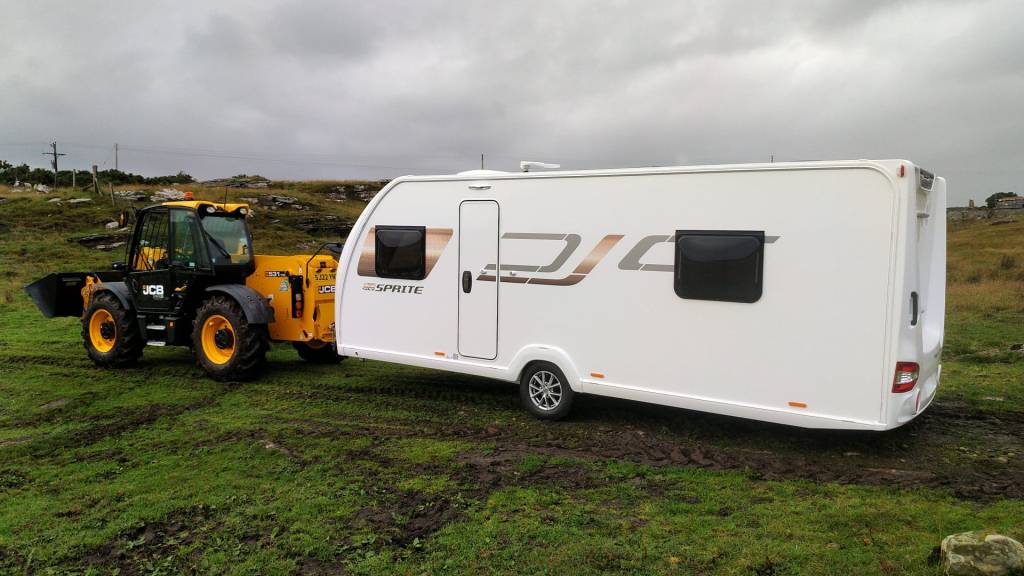
We decided for a Swift Sprite Major 4 EB, which is a caravan with a separate bedroom, living/cooking area and a toilet and shower in the middle of the caravan.
However with a total length of approx 7.5m and only a single axle, it only has limited ground clearance (with limited meaning really limited).
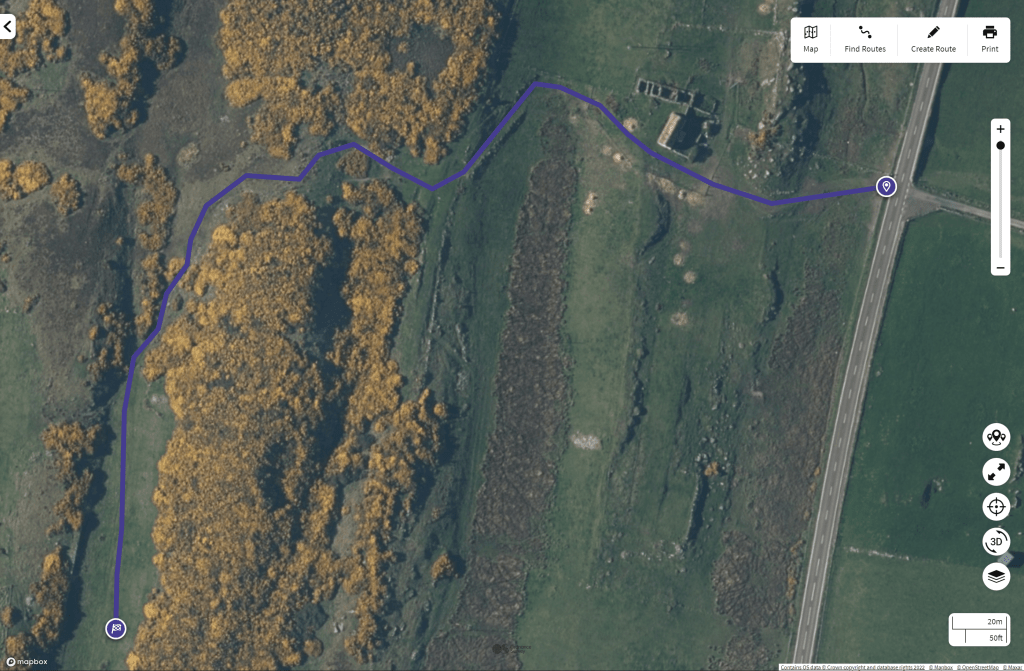
The route (from OS Maps)
Sneak preview: we made the 450m in roughly 4 hours whiche equates to an astonishing 0.1125 kilometer per hour. In the image above you see the route we took.
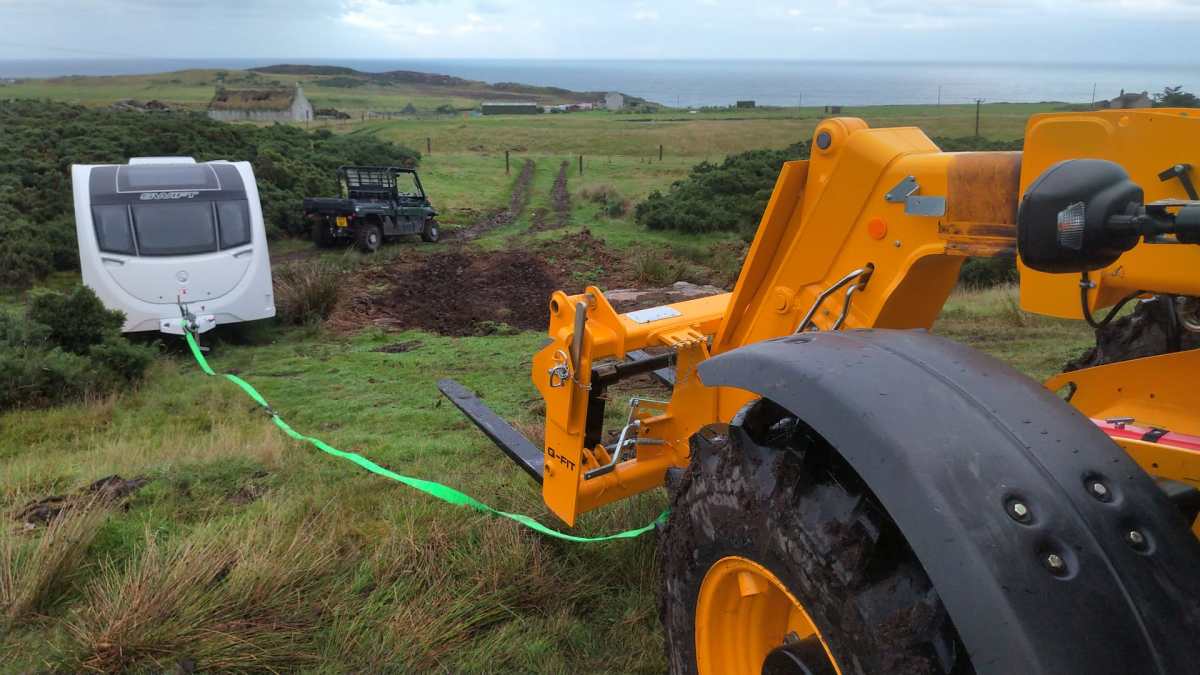
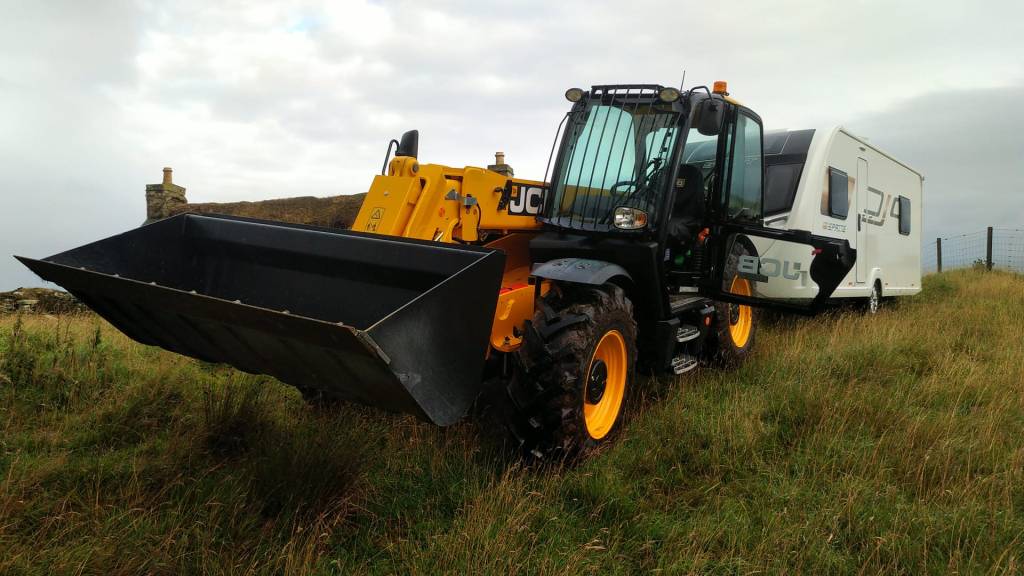
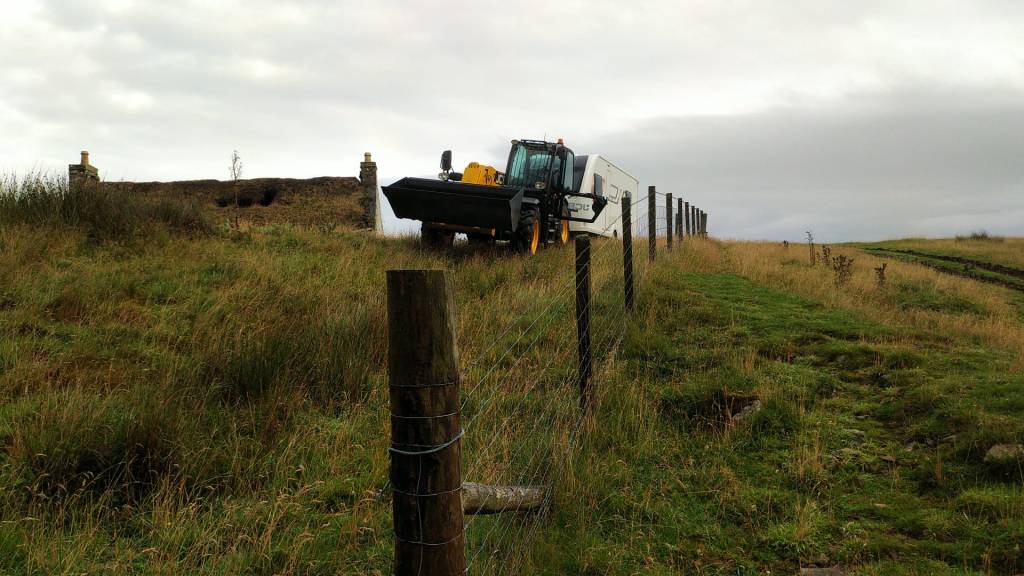
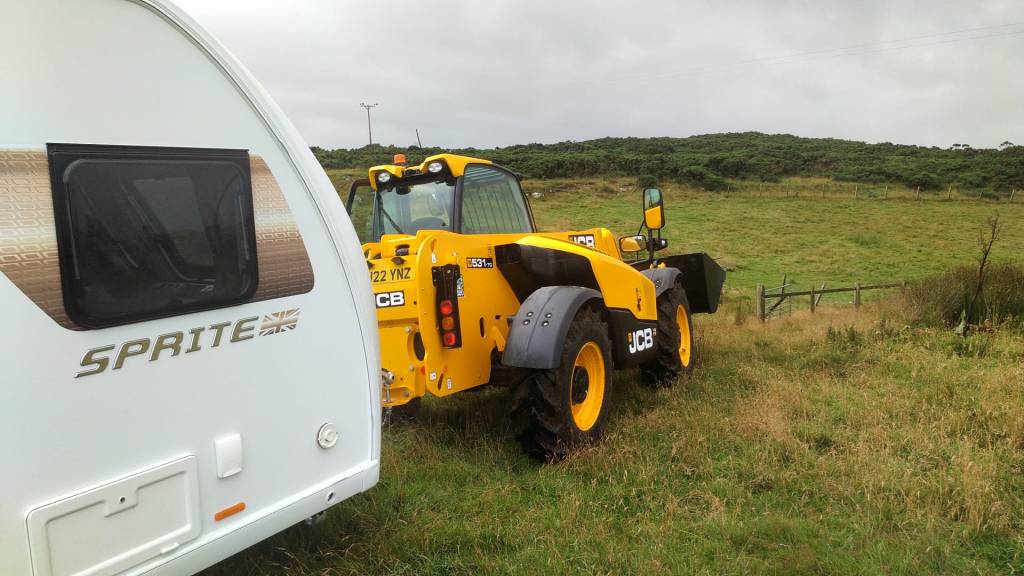
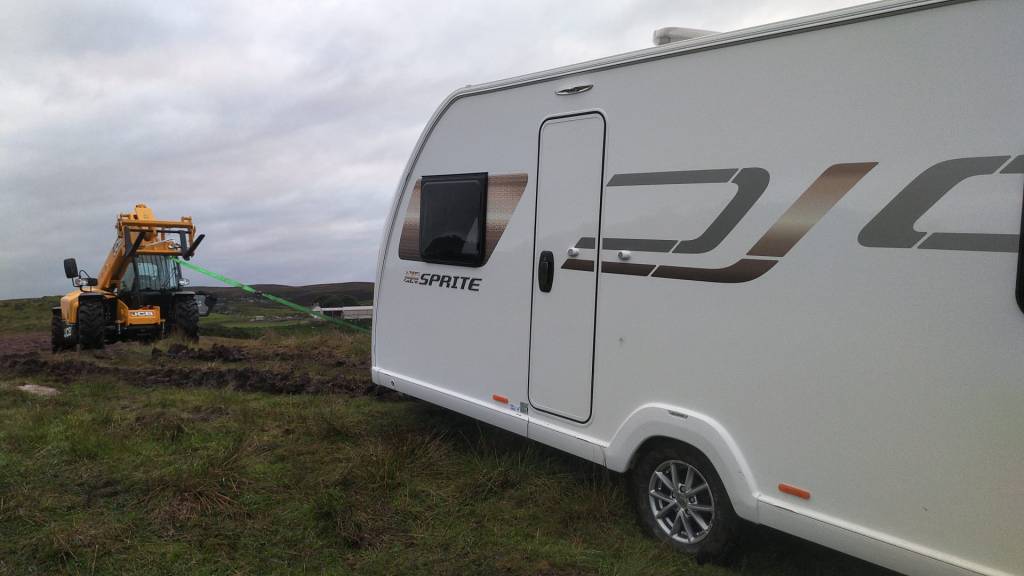
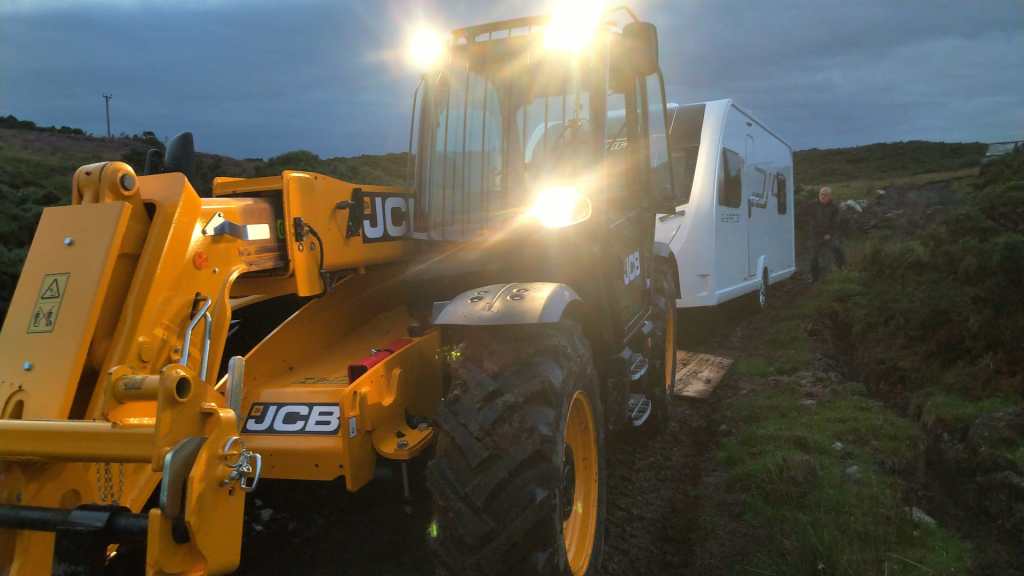
Due to heavy rains in the last couple of days, the whole track was pretty soaked, so we had to use the TeleHandler to pull the caravan. However, the 50mm ball -hitch on the Tele was way to high for the caravan (ca 65cm above the ground), so the effective ground clearance of the caravan was even less (actually less than 10 cm).
I really did not find to take many pictures and videos (too occupied with the whole operation). But you might get at least some impressions of the undertaking.
The bginning of the journeyPlenty of ground clearanceSteeper than it looksAfter the fence we have to turn left onto the rampNot only steep downwards but also steep sidwaysWho needs a whinch?Already getting dark – the final metersArrived at destination
Though we used plywood at the bottom the caravan still got some scratches at the rear. But still in one piece.
We will probably wait, before we move it next time …
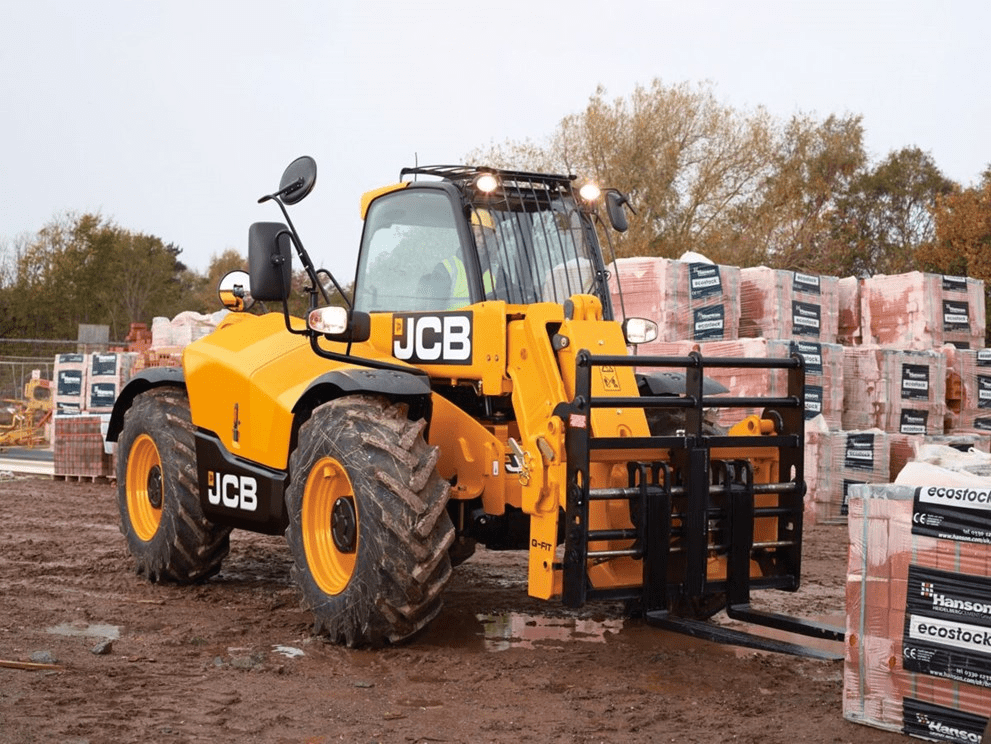
Yesterday was the day, when we finally ordered our all-purpose all-terrain vehicle. It is not exactly the “Car vNext” I wrote about some months ago, but hopefully will serve our needs well. It is a – drum roll – JCB 531-70 TeleHandler.
JCB 531-70
Why did we choose this and why that specific model?
Our plot is currently only accessible via an off-road vehicle and the non-existing road is sometimes in such a bad condition that I really have trouble to get there even with my Hilux (this certainly can also be attributed to my driving skills). While our Kawasaki Mule is fine to get back and forth, it lacks the ability to carry larger loads.
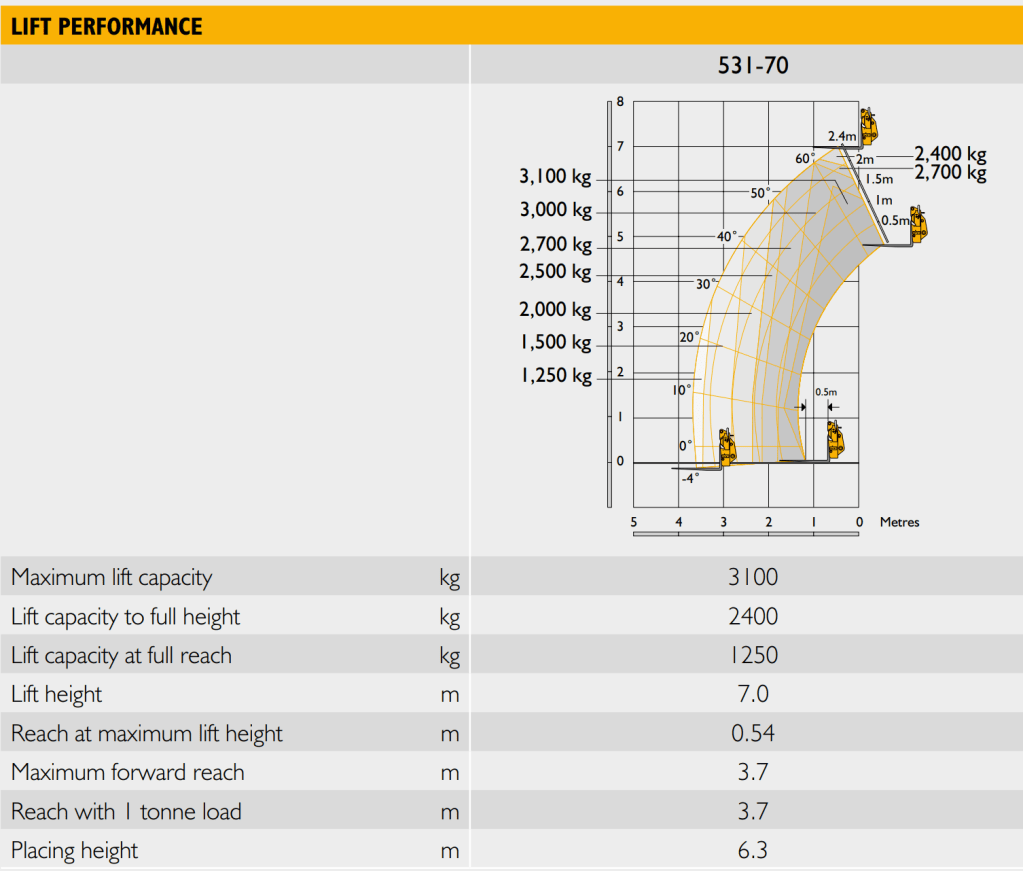
In addition, we wanted to lift things to a level of above 5m (as the barn will be that high). And I wanted to be able to move stuff around without needing to buy a Dumper.
Other factors we considered: larger manufacturer sold by a larger distributor “near by” with a technicican that can react in days not weeks.
So this is why I sticked to the JCB guys in Muir of Ord (despite my mixed feelings at the start).
Because of the lifting hight a normal tractor or wheel loader would not really be a good fit, I ended up with looking at tele handlers.
It is the non-agri version with the small engine, as I do not intend to tow larger loads. And the best of all, it is probably the only machine in that size, that is available this year.
I opted for the 5 year / 2000h warranty extension, as I will probably using it for not more than 400h/y. This means, I can keep it for 4 year and still sell it with one-year of warranty, if I feel like it.
In addition to the standard fork, I also ordered a 1m3 bucket, so I do not need to get a Dumper (we will see how this turns out). Plus I swapped the construction tyres to proper agri tyres.
A note regarding pricing: looking at used machines showed me, that even after a couple of years and thousands of hours, they still sell for roughly the half of a new one. And with the current inflation rates rising, I came to the conclusion that a new model will be actually cheaper. As weird as it may sound …
And now for some techie bits:
JCB 531-70 Lift Performance
Looking at the chart, lifting stones and a generator should not be a problem at all.
Delivery is scheduled for end of June. So until I keep happily waiting …
Things that can happen when you buy used machinery.
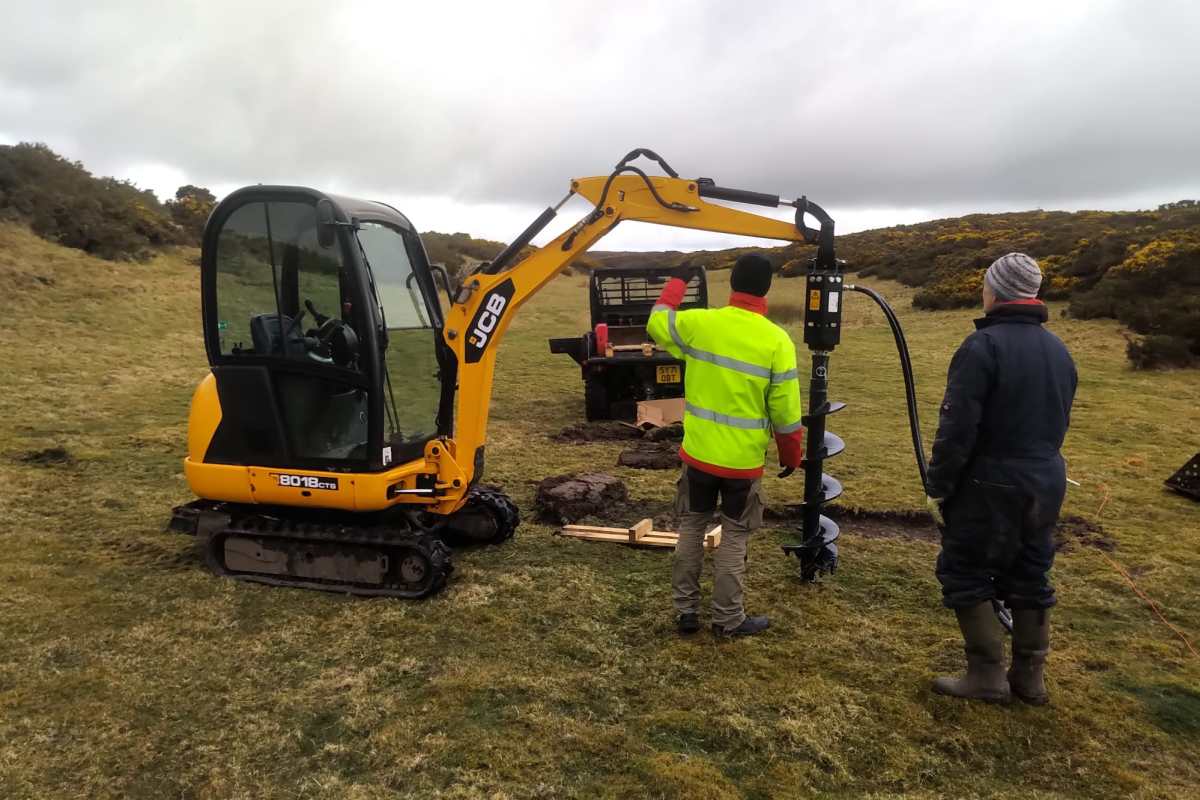
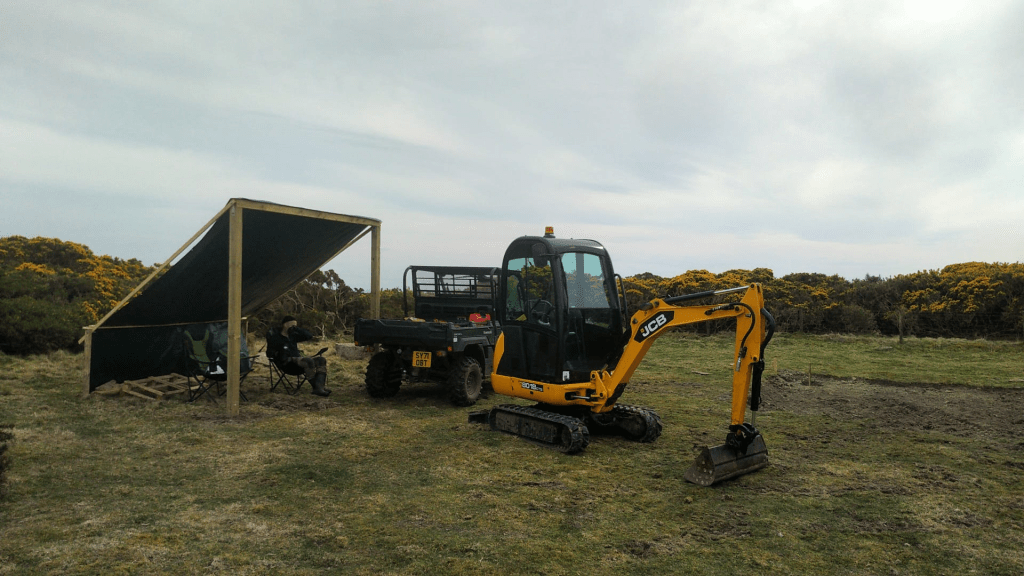
Last time I shared the news that we got ourselves a digger. Now after roughly two weeks, I wanted to share a quick update on the good, the bad and the ugly.
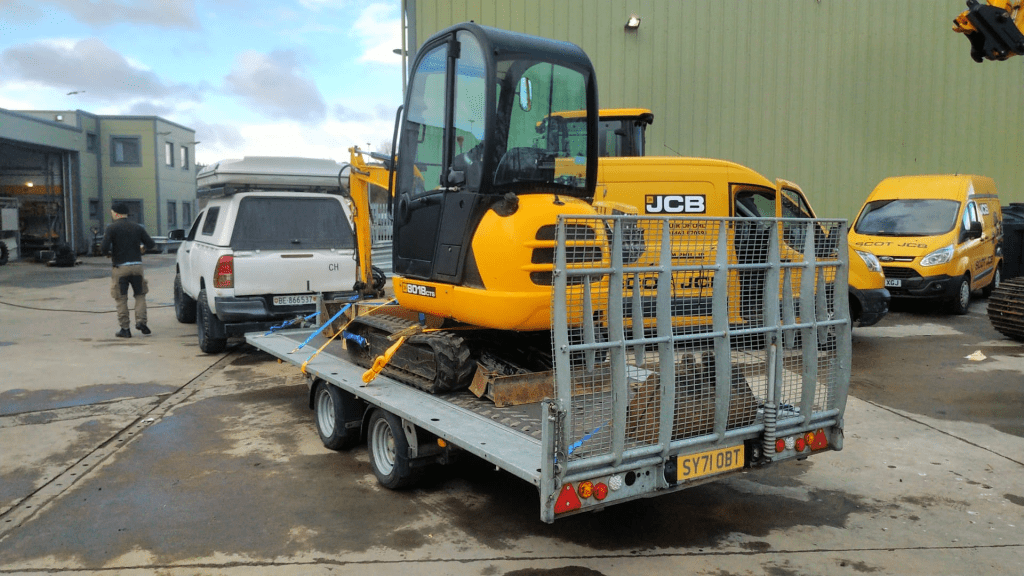
So, on the 8th of April we went to the JCB Scot depot in Muir of Ord to pick up our digger. But before we could actually do that, we had to visit the cool guys at Farm & Forestry Equipment in Ardersier to borrow a trailer. When we finally arrived in Muir of Ord, the digger was actually there and the people on site actually sort of knew we were about to collect it. So far so good.
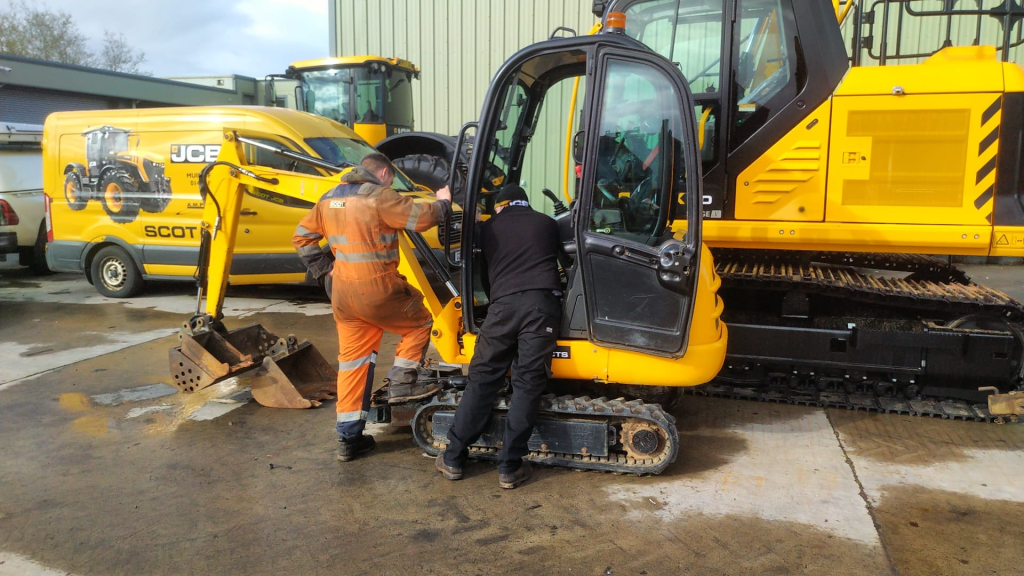
What was not so good, was the “fully serviced” digger appeared as being not so fully serviced. How could I tell with my zero minutes of excavator experience? For example, the hydraulic switches of the boom were not working. Obviously something that can get unnoticed during servicing. But no worries – the mighty on site engineer just hissed “boys” and called in one of his subordinate mechanics.
Engineer and his mechanic
With a universal screw wrench the problem was immediately fixed and quite as immediately broke again. After some retries I was assured if this *ever* broke again, someone would come up to out place to get this sorted. Great! (sneak preview into the future: as soon as we unloaded the digger the problem resurfaced and has not been properly repaired until now)
Excavator loaded
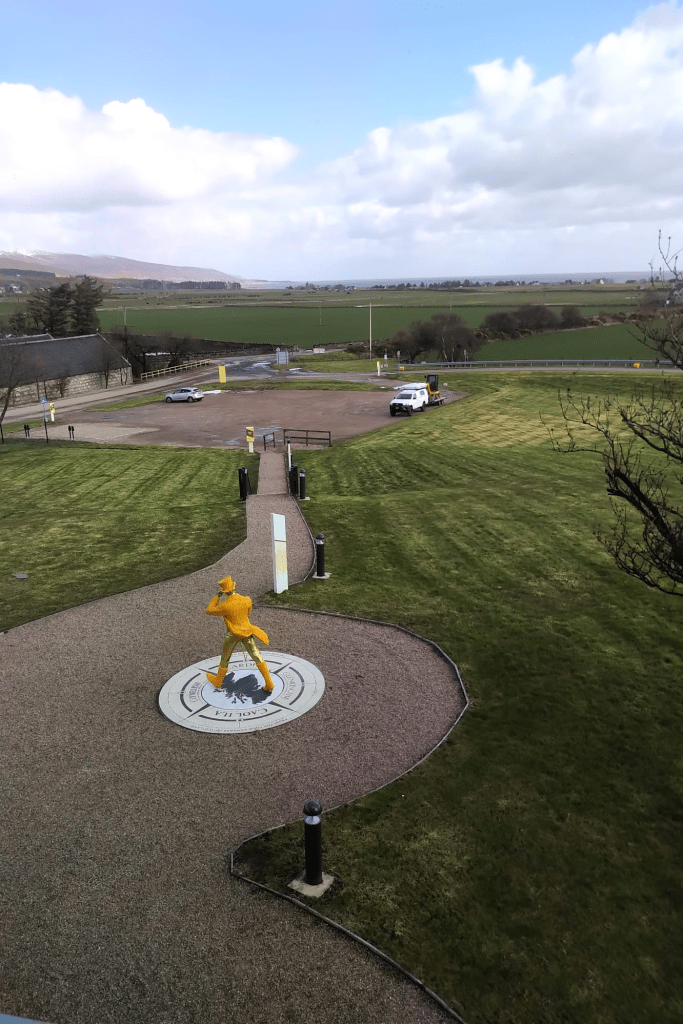
After some loading we were good to go and crawled back to Caithness. But not without paying a quick visit to Clynelish in Brora.
Clynelish in Brora and an Excavator
We enjoyed the view in the lovely bar/café on the first floor and continued our journey all the way to our plot, where we were warmly welcomed.
Welcome to the plot
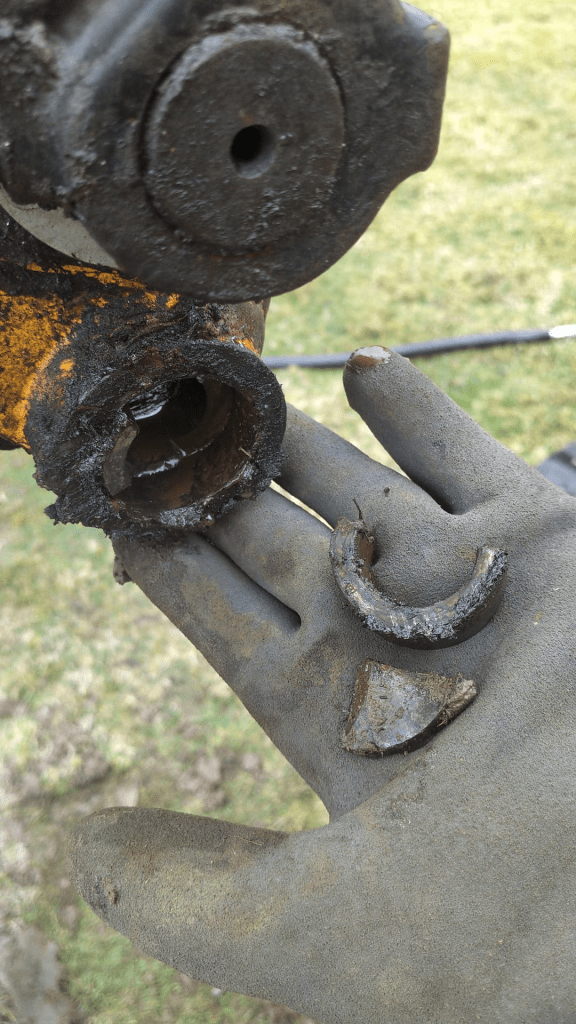
So what was next? After unpacking we not only found out that the boom hydraulic switch was again not working (only moving to the left), but also found the bushings being broken when we took off a bucket. To the defense of the “fully serviced supervisor” this can also easily get unnoticed when you are not changing the buckets before handover.
One time bushing?
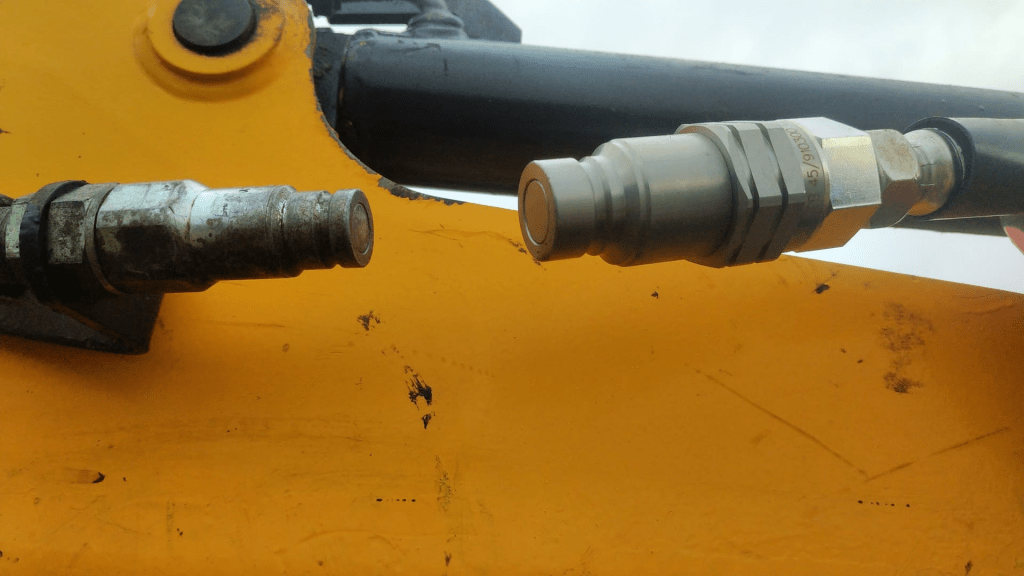
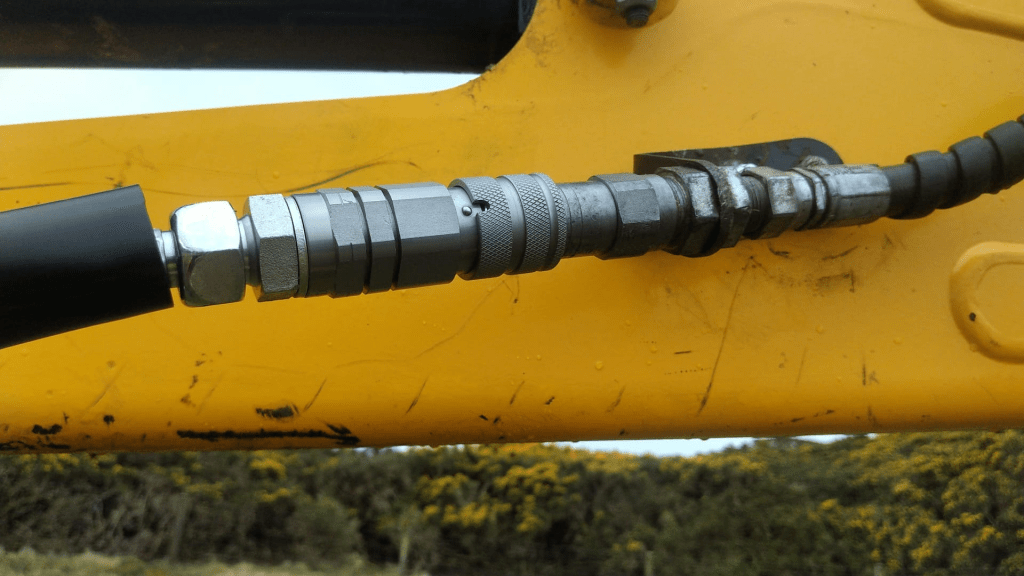
In addition, the as being “new” sold earth drill was apparently not so new, but only a refurbished model (as we could see by some delivery note that someone had forgotten to take away before handing it over to us). But it actually did not matter, as the sockets for the hydraulic were not the same size as the ones on the digger anyway.
Hmm – does it fit?
Trying to find a positive side: the mechanic would not have to come over to just fix a single problem, but a lot of things. After sales servicing to its excellence?
So I found myself in the position to report my digger “DOA” and was quickly assured that someone would come over to help me on that. Being handed over a mobile phone number I left a message with some clear coordinates where the patient would to be found and waited to the next morning (without any real hope, that actually some would show up).
I was wrong. In the moring I got a call and suprisingly two guys showed up and did their work:
Bushed repaired CHECK
Auxiliary hydraulic valve adjusted CHECKIt was only a temporary fix and the right adapters were missing.
Hydraulic pedal fixed CHECKIt fell off after a couple of pushes on the pedal again.
The new adapter – the longer the better
So after the mechanics left, I could at least try with my “new” earth drill. Just to find out, that the hydraulics on the hydraulic hoses of the drill leaked. And I found out, that the hydraulics tank was nearly empty. Also something one normally would not notice when performing some service work before handing it out to a customer.
Side note: in what status would I receive something by that company that was *not new* and *not fully serviced*? This was actually a question I later asked the sales guy. Answer: inconclusive.
But hey, labour seems not be the most expensive part of repair works and therefore I was able to enjoy a vitis of the mechanics on the same day!
To cut a long story short; here is the result as of today:
Hydraulics fixed
Hydraulic oil refilled (free of charge)
Hydraulic pedal still not repaired
And now still waiting for the next visit of the mechanics.
Happy digger operator
And to wrap up the whole story:
JCB Scot was really helping to get this issue fixed; until now this has all been done under “warranty” of a nine-year-old digger.
So would I ever buy a used machine again (me, who has no clue about construction machinery)? Maybe, but probably only “cheaper” and “smaller” machines.
Would I buy from them again? Probably yes, as they still provide a “good” service overall (and they are the nearest seller from our plot).
In one of our last posts we wrote about the upcoming, yet to be built, electricity setup in the vNext Car.
And now we changed our plans – slightly. Before deciding definitely for the Pylontech as the battery supplier, we thought we would install and test a comparable setup with both BYD and Pylontech.
Why did we do that? Having a look at the US3000C specs, we see that the recommended (dis)charge current is considerably lower than those from BYD (37A vs 65A). Of course, both batteries supply higher currents than that (74A vs 90A). But the cables sizes of the Pylontech box only supports a maximum of 2*100A, whereas the B-Box supports up to 250A. This maximum recommended current makes a difference when only having 2 batteries at your disposal, as the maximum surge current of the Victron MultiPlus II 48/3000 inverter is 5500W. So with Pylontech I can only support 2* 37A * 48V = 3552W without going over the recommended current and with BYD I can draw 2 * 65A * 48V = 6240W which is over the supported maximum of the inverter. So this is an advantage for BYD. Plus the overall capacity of BYD is higher (and comes at a larger weight).
Consequences and some calculation
But of course this has a drawback, as I want to use a DC Circuit Breaker with an integrated isolator, instead of a mains switch and a regular one-time fuse for the batteries. Most of the DC breakers only work up to a 63A and the larger ones are considerably more expensive.
On the other hand, the guarantee and fine-print with BYD declares indicated values are only achieved at a 0.2C rating, meaning that I could only constantly draw a 8000Wh * 0.2C = 1600W anyway, if I wanted to make use of the whole capacity (100% DoD).
Unfortunately I could find no C rating for Pylontech. However, in their warranty, Pylontech writes that the denoted values are only achieved when (dis)charging at 10A per battery (95% DoD). If I calculate this correctly, this would be an equivalent of roughly 2* 10A / (2 * 3374Wh / 51.2V) = 0.15C. In both cases the inverter should only much less than needed to support an induction cooktop and frankly any two devices at a time.
As a side note: Interestingly the B-Box seems to be cheaper per kWh than the Pylontech (as long as you stick with a single battery group).
So what does this mean?
In either case I will overrun the C rating of both batteries, meaning I will not get the full “official” capacity or life-time out of it. On the other hand, for our car installation this will not make much of a difference, as the Safiery Scotty DC-DC charger will recharge the batteries anytime when needed.
But when designing a complete off-grid system this will make a difference, as there we probably want to achieve a maximum amount of usable capacity and life-time.
But anyway, I will be making two installations and compare them in respect of the ISO25010 main product characteristic categories:
one installation with BYD Battery-Box LVS Premium 8.0 and
one with a pair of Pylontech US3000C batteries.
The B-Box has already been ordered. For Pylontech I am still awaiting a confirmation of the quote.
I keep you posted.
Update
Due to the difficulties of getting Pylontech batteries I had to skip the test and go straight for the BYD Battery-Box. See here for how it runs next to our caravan.
Pylontech Documentation as this does not really seem to be available on their website.
If you read the warranty card carefully, we see that the warranty extension from three to seven years has to be taken with a grain of salt. In addition, the replacement process (even to dead-on-arrive) is not
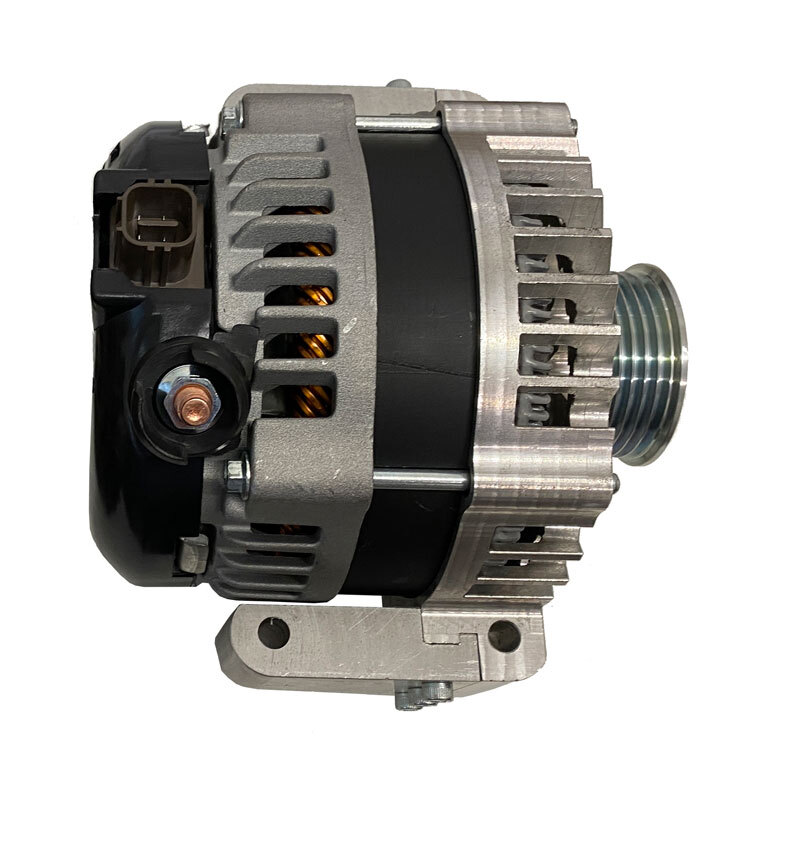
Toyota Hilux 2.4D 2020 with a Safiery 250A Alternator
Our current Hilux is from early 2020 with a 2.4D engine and has a built-in 100A alternator which is frankly quite underpowered to quickly charge our 2 * 12.8V 200Ah Liontron batteries. When I installed 3* Victron Smart Orion-Tr 12-12 30A DC-DC chargers, I could only use 2 of them at a time.
When I talked to the guy who sold us the car, to get an upgrade, I was told, there is no bigger alternator than 100A and no room for a 2nd alternator in the engine compartment. What a pity.
48 system in a car and running everything from AC.
We are getting ready for our next car. Or at least start thinking about it. Roughly, we want something like a MB Sprinter (short version, normal roof) and built the interior ourselves. And of course, when doing this, electricity is one part of it.
In this post we give a brief explanation of our requirements, use cases and possible solutions we came up with.
Storage capacity in our existing Toyota is 5’120Wh brutto with two Liontron 12V @200Ah batteries costing around 1’990,00 CHF, which makes 0,77 CHF / Wh. For our next van we would like to increase the storage capacity and the larger inverter, but keep cost down if possible. Currently we use 35mm2 cables to run our 1’200W inverter, so to run a larger inverter we would have to increase cable sizes in our system significantly – or increase voltage size.
After some thinking, we opted for a 48V system (rather unusual for a car) with two Pylontech Us3000 batteries summing up to a net capacity of 6’400Wh. Considering the price for the batteries (arund 1’730,00 CHF each) this would lower the price to 0,54 CHF / Wh. With this capacity we could run an 3000VA / 2400W inverter and cable sizes could then even stay the same.
However, the main problem with that setup would be to get 48V from a 12V alternator. But luckily, we are not the first tasked with this problem and Safiery has a solution just for that: Safiery Scotty 12V-48V DC/DC converter at different power levels (1000W, 1500W, 3000W). As the car engine would have a 250A alternator, the setup could really benefit from even the largest model. Ideally the DC/DC converter would be installed in the engine compartment, in order to minimise the relative voltage drop on the way into pssenger area.
As we currently do not have a fixed solar system, this is definitely something on our wishlist. But with that large DC/DC inverter and the fact that we are not staying for days at a single spot without moving the van, the initial cost for 400W solar panels just do not seem to be justified. So, we thought we prepare everything, so we can later still install solar panels without having to redo a lot of installation work. Enter Victron Energy EasySolar-II 48/3000/35-32 MPPT 250/70 GX. Now, how does this roll of the tongue?
But in fact, that system really looks promising: in a H 499mm x W 268mm x D 237mm box at a weight of 26kg, you get
a 3000 VA inverter,
250V/70A MPPT solar charger,
two AC out 230V @13A,
a communication controller (GX) with Can bus. USB, network connections (wired, wireless),
a 230V AC/DC battery charger with a 35A DC output (rather small),
programmable relays;
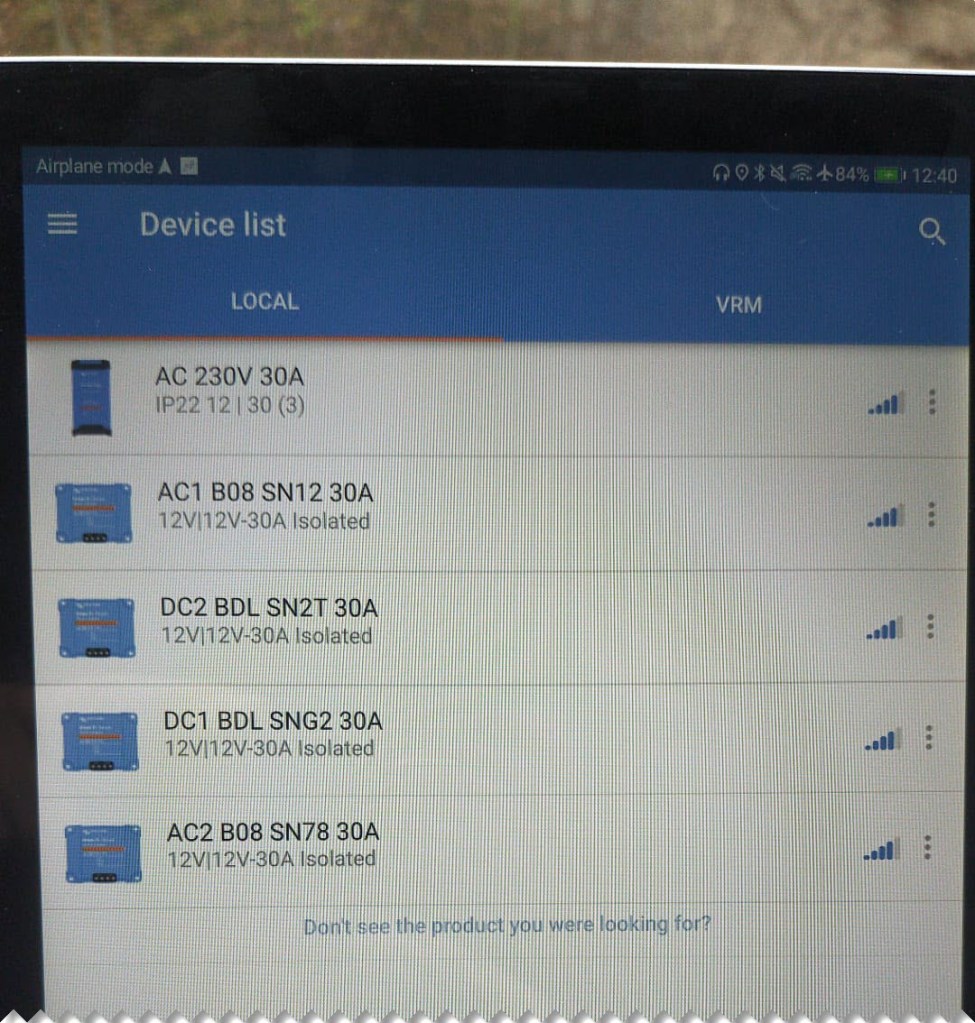
everything to be monitored and administered via a tablet,
options for future expandability such as LTE and GPS exist.
Considering, both the Scotty and the US3000 also have a CAN bus interface, this really make a neat paclage, as all devices are able to talk to each other. More bang for the buck.
At least in theory. As I have not built it yet. But I think, this is a good starting point. I will contact the vendors to get a response if my setup is supported and if there are any reference installations on it.
Now you might wonder, how I would charge my other 12V devices, as I do not have a single 12V output in the setup. And yes, I thought about this too, and came to the conclusion: I do not need 12V output. Or sort of.
Compressor, winch etc I will power from the alternator directly. All the rest I will power via AC, such as the fridge, mobile, USB, notebook. This of course, comes with a penalty, as I have to convert the energy twice. But this also saves me an additional device and a lot of cabling and extra fuse boxes (and this is all saved space).
Now about the weight:
the inverter I already mentioned 26kg: EasySolar-II 48/3000 GX
64kg: 2* Pylontech US3000
plus additional devices, such as 12V/48V DC/DC converter, bus bar, fuses, cables,
future solar panels would come on top (no pun intended).
The van (2-seater) has a total loading capacity of 1080kg, so I think this is a justifiable weight for a pretty massive power system.
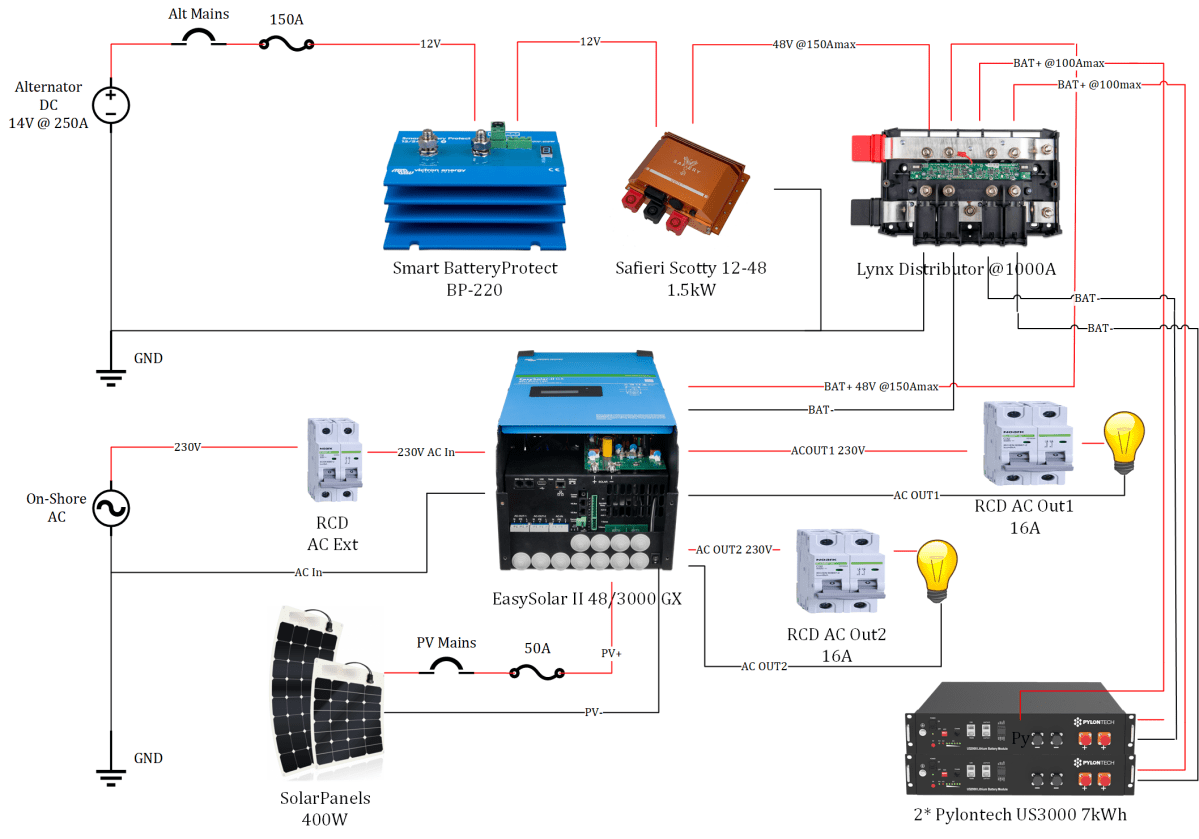
For connection of these systems, I opted for a bus bar with integrated fuses, the Victron Energy Lynx Distributor, though a back-to-back-cabling with extra fuse boxes would also have worked.
In case, the interaction with Safiery, Victron and Pylontech via CAN bus does not work out as expected, I would insert a Smart BatteryProtect BP-220 in front of the Scotty, so I can switch the converter on and off depending on the ATD and ATC signal in the EasySolar via a relay.
System diagram: Van Electricity
So these are my plans for the next van. I am curious, what response I get from the vendors and how it all works out.
In case you have questions or recommendations for improvement, I am more than happy to hear from you.
Back, when we bought our Toyota Hilux we basically got the cheapest variant we could get; meaning, that we would not have seat heating or SatNav system. Instead we got a built-in no-extras “entertainment system” with a CDplayer. I added some links, in case you are generation x-why-z-what-do-i-know and were obliged to pass on this pre-historic equipment.
But that now has changed! (And no, we did not upgrade to DVD.)
When sorting through some boxes, I discovered an old Android tablet (a Huawei MediaPad T3 7″, if I am not mistaken; with street prices around 70 CHF) that still seemed to work. When I checked, that it could still run Google Maps and connect to my Victron Chargers and LionTron batteries, I thought I give it try.
With some Velcro I quickly sticked the tablet on the screen of the “entertainment system” and the CD slot. And I must say, it looks exactly as it was built for being in that very place.
Finally, I could make use of the 3.5,mm TRS input and the USB charger on the front. However, the charger does not provide enough power to charge the device. It just prevents it from discharging. So maybe, I still have to use the charger at the 12V cigarette output.
On the other hand, my onboard monitoring capability greatly improved, as now all my apps are much better readable due to the larger screen.
And now the cables:
I used a 3.5mm TRS male to 3.5mm TRS male cable (originally from my JBL BoomBox 2) that just fitted.
An short MicroUSB to USB-A cable with cable ties.
But to all this good news there is one caveat: now, I do not have a CD player any more.
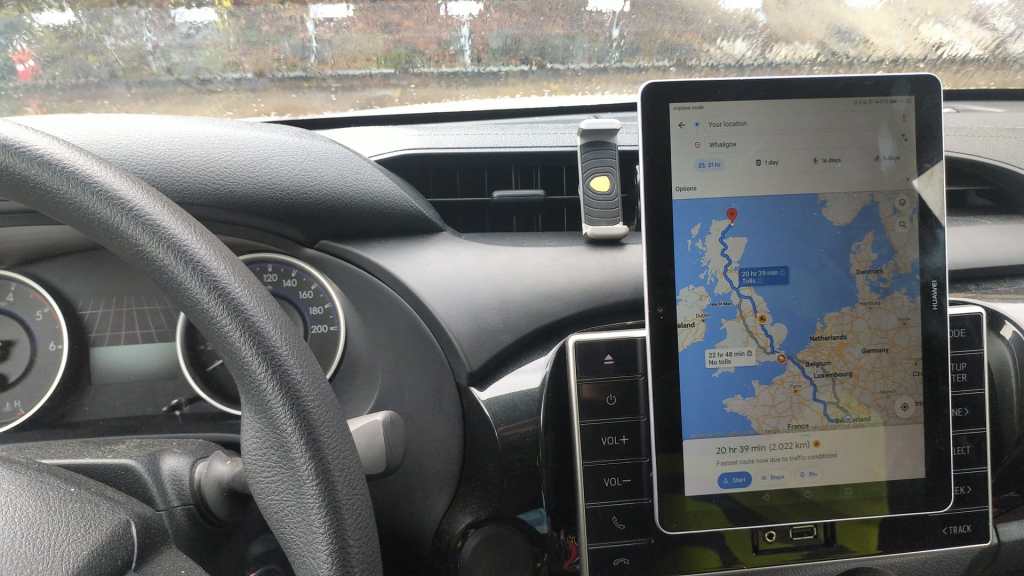
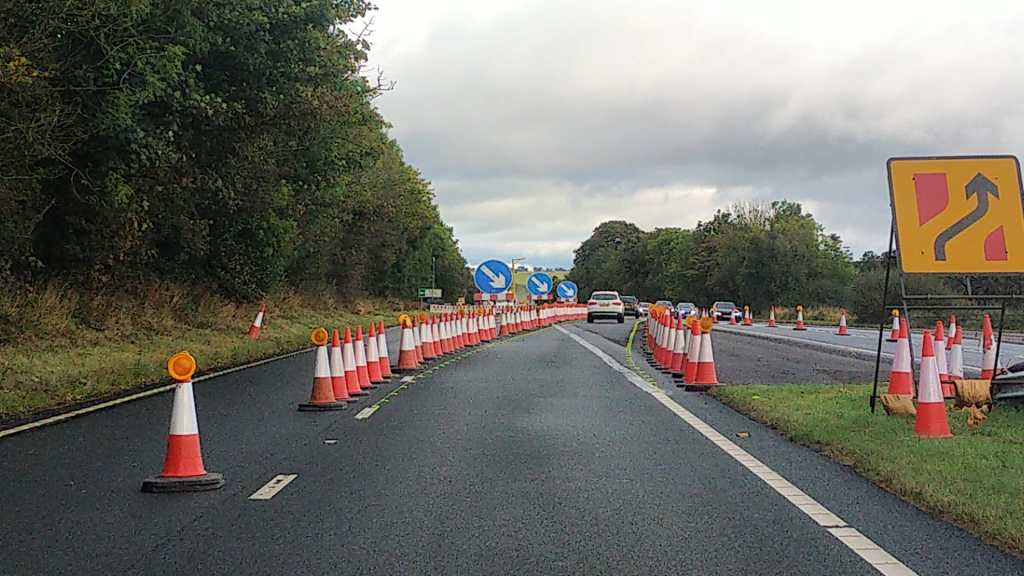
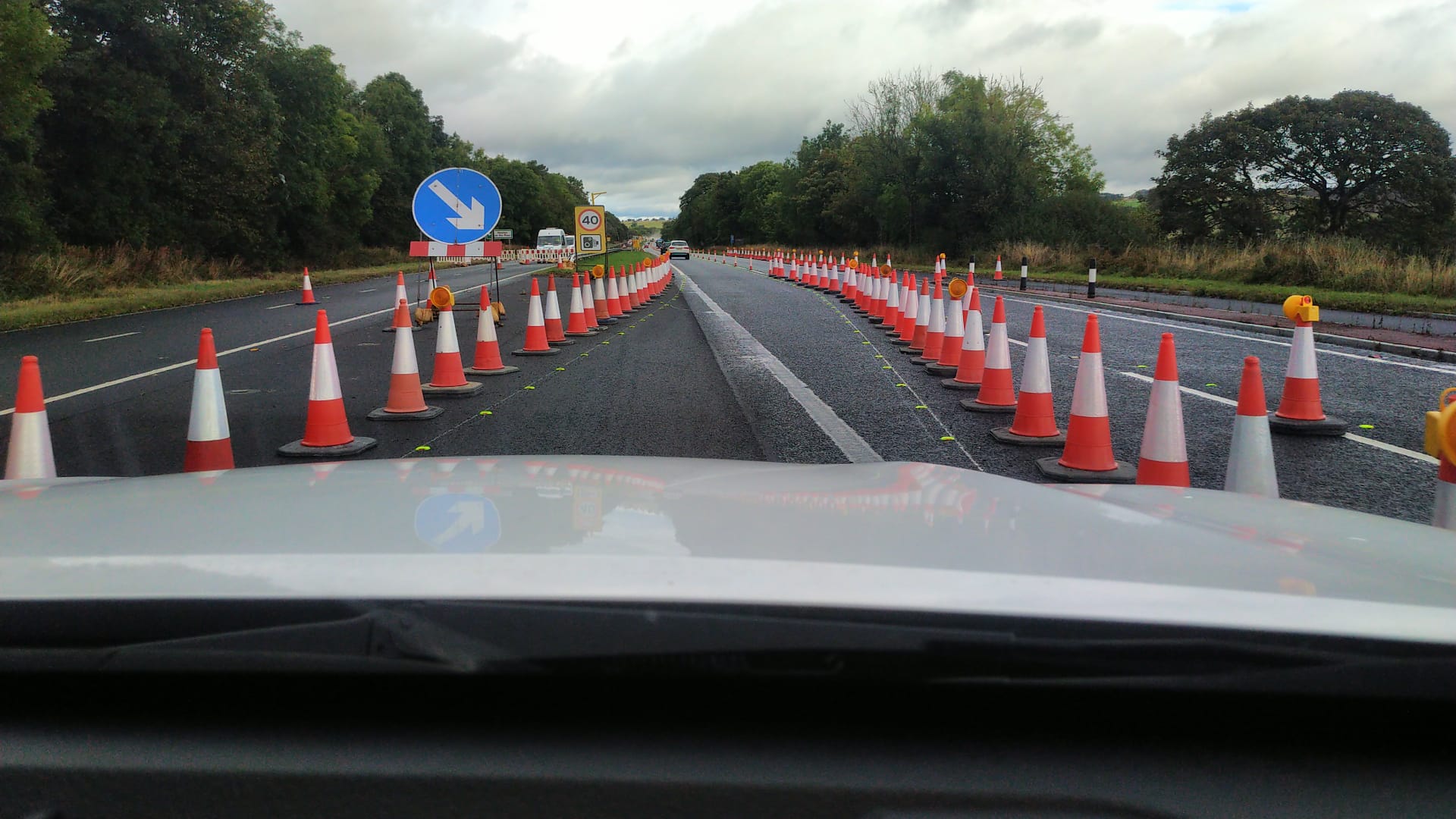
So we made it up to Caithness. The road was good. We were once more surprised at how serious the Britts are about those traffic cones. They not only mark the way with them, they litteraly build walls with those things…
Before arriving in the UK, we have been worried about the fuel shortage, we read about in the news. This is why we decided to first leave the bigger cities behind us, before trying to find diesel. Turns out, there was no problem really. The very first gas station we tried, had fuel and not even a line of waiting cars. So we took that for a favorable sign and continued our journey north.
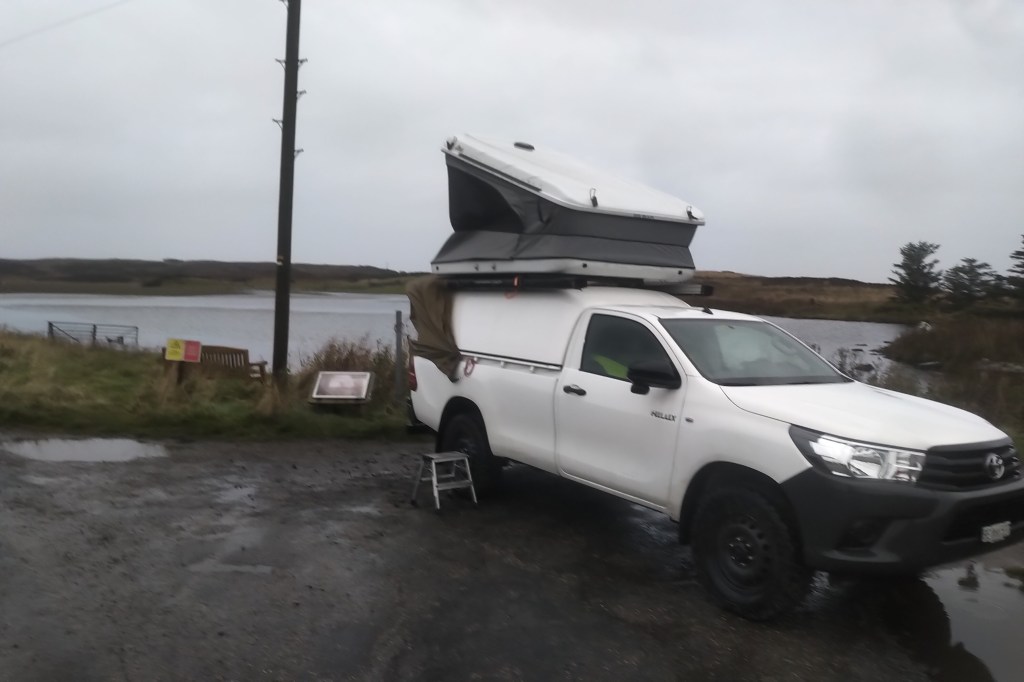
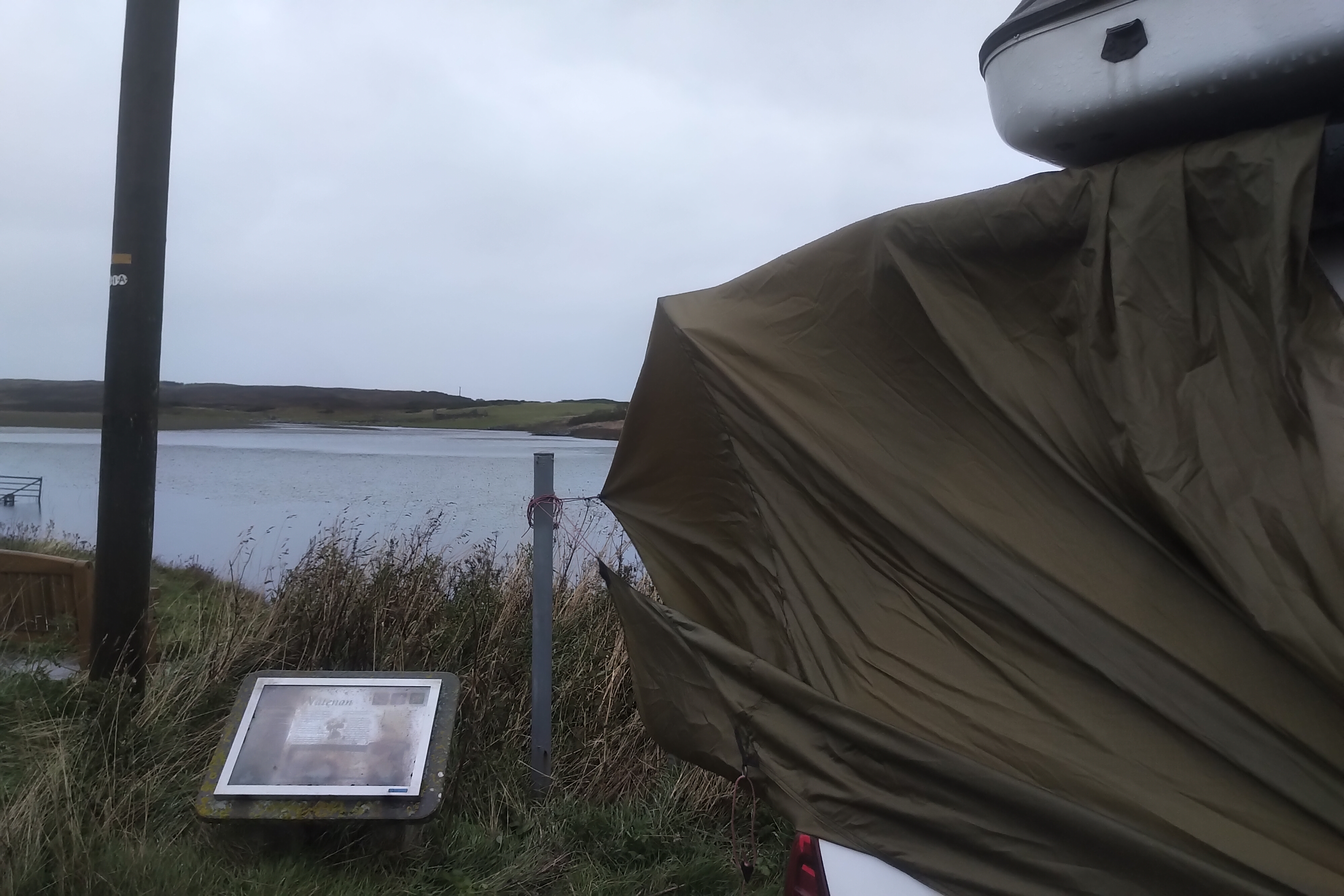
Loch Watenan welcomed us with some rain but also with the most heartwarming hello from our neightbours.
Having learned from our last trip, we did NOT try to drive on our plot by night without knowing the state of the ground. This is why we stayed over the night on the parking space south of the lake.
The night was calm and clear, allowing us to see an amazing starry sky.
(OK, you might need some imagination for that one…)
And right now, the day is breaking in a breathtaking manner on Loch Watenan…












 Our Journey to Scotland