Crimping and using TE AMP SuperSeal 1.5 connectors

Recently, I bought some additional high beam lights from LazerLamps for our truck. For this I had to create and extend a couple of connectors. TE AMP SuperSeal 1.5 connectors, as it turned out. This article serves as an aide-mémoire to me when I have to use and order these connectors in the future. And it might be of no particular interest to you at all. So, feel free and skip reading …

First, these connectors do not have a typical male/female plug/socket arrangement. Instead, they use

  • “male” plug housing with “female” receptable contacts
  • “female” cap housing with “male” pins or contacts (called tab contacts)

The SuperSeal 1.5 connector becomes water tight (IP67) by using wire seals that have to be used on every single wire and are crimped to the contacts. So, the contacts have two crimp points:

  1. Outer crimp
    for attaching the wire seal and the insulation of the wire insulation which also serves as a bend protection
  2. Inner crimp
    for crimping the uninsulated wire to the contact – and this uninsulated part is rather short: only 4mm.
    This is suprising as the connectors are still rated for 14A.

Note: The wire seals come in different diameters and colours with “yellow” the most common size (especially when buying no-name clones).

For the correct way of crimping these connectors, I could reuse my existing Knipex Crimp System Plier (97 43 200) and just add the matching crimping dies 97 49 28 along with the wire feed stopper 97 49 28 1. The latter greatly helps to have the right insertion depth when crimping, as one cannot really see anything due to the wire seal attached to the cable.

After crimping the contacts have to be inserted into the housing. And there is only one correct and possible direction which fits. Audible and tactile feedback is given with correct insertion.

Both housings have locks (usually in red) that must be open for insertion and extraction and locked for use. Gettings these locks unlocked is quite tricky and a specialised tool is highly recommended – especially for the cap housing. The same for the actual extraction of the contacts themselves. I found it easy to destroy the contact, housing or screwdriver when not done carefully or properly.

There is a good video (in german) that shows how to use the pliers and assemble the connectors:

Here is a summary of most of the parts along with their contact sizes.

Cross Section mm2Plug Housing
w/ Receptable Contacts
Cap Housing
w/ Tab Contacts
Wire Seals
0.35 .. 0.50282403-1282404-1281934-4
(1.2 .. 1.6mm)
green
0.75 .. 1.50282110-1282109-1281934-2
(1.7 .. 2.4mm)
yellow
1.50 .. 2.50282466-1282465-1281934-3
(2.5 .. 3.3mm)
red
Extraction / Insertion Tools9-1579007-19-1579007-1
Positions
Number of Contacts / Pins
Extraction / Insertion Tools
1282079-2282103-12452133-1
785061-1
2282080-1282104-12452133-1
785061-1
3282087-1282105-12452133-1
785061-2
4282088-1282106-12452133-1
785061-2
5282089-1282107-12452133-1
785061-2
6282090-1282108-12452133-1
785061-2
TE AMP SuperSeal 1.5 contact part numbers (w/o gold contacts)

There are some additional parts that might be of interest as well:

Example

A complete 3-pin socket/plug for 1.5mm2 thus consists of the following part numbers:

Here is a copy of the official data sheet from TE:

Note: I first bought a cheap SuperSeal no-name clone for testing the crimping pliers before I tried with the originals. Saved me quite some money …

So, this is it for today. Hope you find this useful. It surely helped me.
Glas ceramic hob Steba HK 30

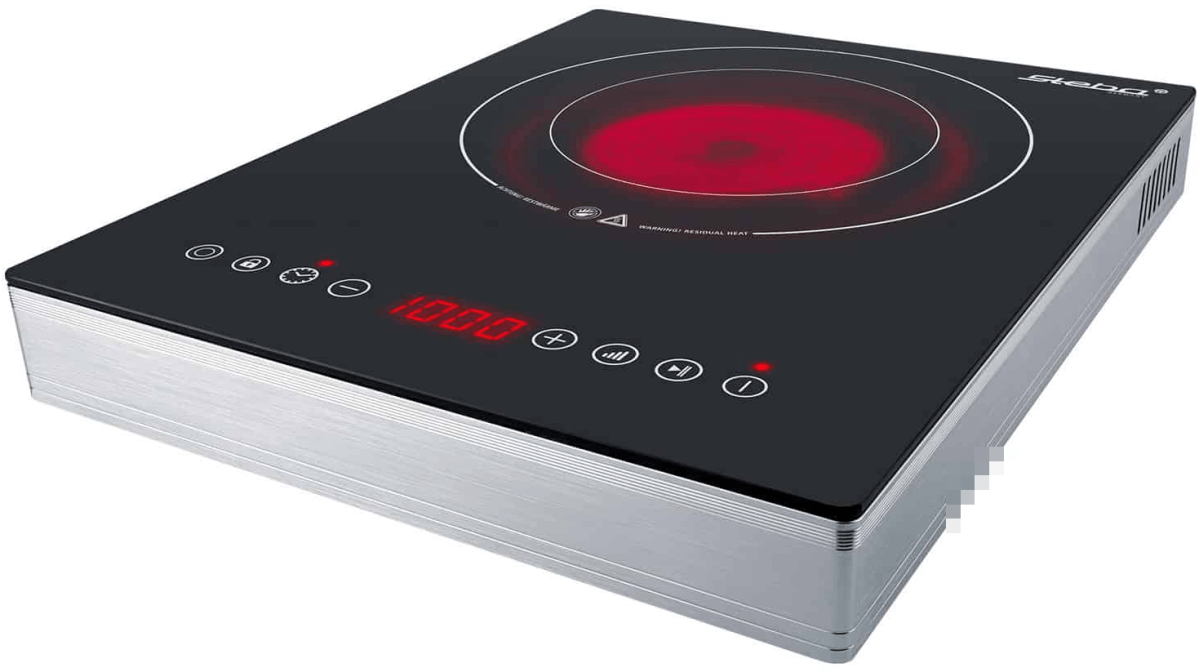
In order to cook in our Toyota Hilux and Toyota Hiace we use a glass ceramic hob Steba HK 30 that – according to the manufacturer – allows for precise adjustment of the power consumption from a company called Steba. However, in reality these ratings seem to be different. In this article, I give an overview of the energy ratings I measured.

Observed Power Consumption

The hob has 2 rings with a nominal rating of

  • Ring 1
    100w, 400W, 600W, 700W, 800W, 900W, 1’000W
  • Ring 2
    200W, 800W, 1’200W, 1’400W, 1’600W, 1’800W, 2’000W

In the table below you see the actual values I measured in comparison to the nominal values as shown on the hob. For our Victron MultiPlus Compact 24/1600/40-16 the highest setting is on Ring 2 with 1600W nominal.

RingWnominalWaverageWminWmax
0000.44.1
1100200225254
2200450417459
1400400375409
1600475450477
1700600580602
1800700708731
2800750699770
1900860850863
11’000930932934
21’200900863901
21’4001’1501’1081’148
21’6001’4001’3681’396
21’8001’6501’6451’659
22’0001’8001’7871’795
Energy ratings of Steba HK 30

Other Observations

There are a couple of (negative) things that I noticed when using this hob:

  1. When using the outer Ring 2 (or the full hob) the lowest level you can choose is 200W or then already 800W which turns out to be too much when trying to cook for a longer period of time. In my case, I use a large cast iron pot and let it cook for 4h to 5h. With 200W it was too little and with 800W it effectively started burning its contents at the bottom.
  2. After 2h – 3h of constant use the hob once switched off after the pot boild over and spilled sauce on the hob. But I do not know if this was just a coincidence. After turning it back on it worked without interruption for another 2h – 3h.
  3. The hob pulses when heating, i.e. turning the heating rings on an off very quickly. This seemed to stress the inverter when it was connected to mains (which was another inverter on batteries). For whatever reason it quite often drew power from the battery instead from mains.
  4. After use the hob keeps a ventilator running for approximately 15min. It is rather on the loud side but not necessarily disturbing. Power draw during the cool down phase is 4W. When cooking something on the move one has to take that duration into consideration before switching it off.
  5. The device is relatively bulky for that it is meant for only a single pot.

Summary

Most of the devices are not perfect (as described in the observations above). But all in all I really like the hob and we use it quite often. It is easy to clean and usable over several hours of constant use. Bon appetit.

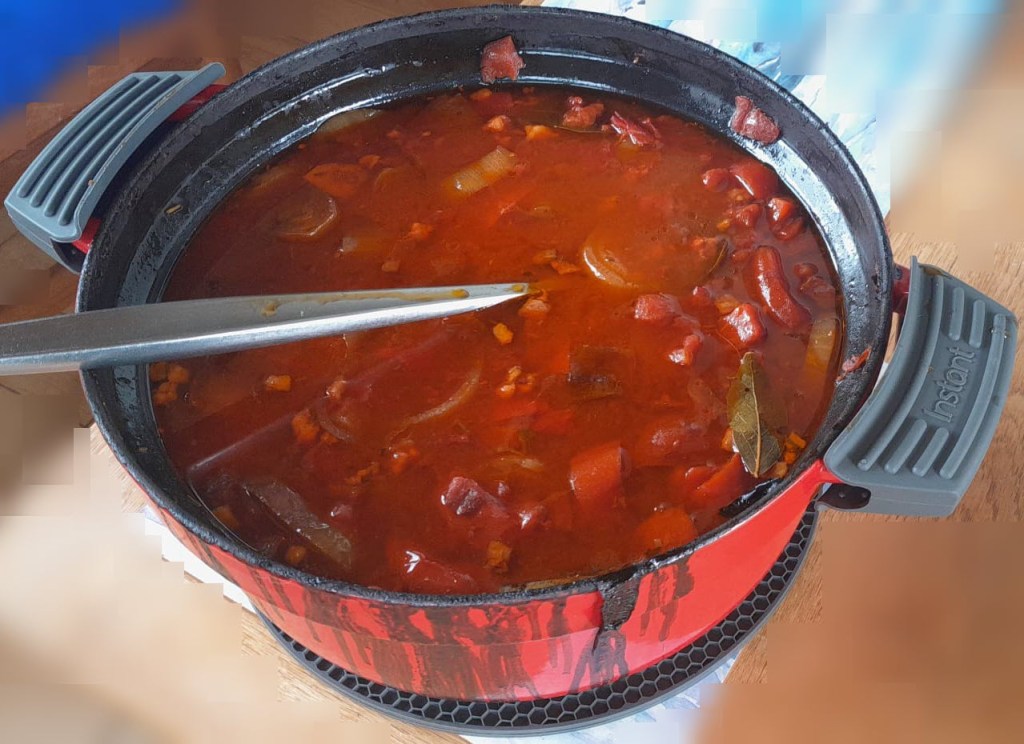
Pulled Pork cooked on the Steba HK 30 with a Victron MultiPlus ( 1 )
Pulled Pork cooked on the Steba HK 30 with a Victron MultiPlus ( 2 )
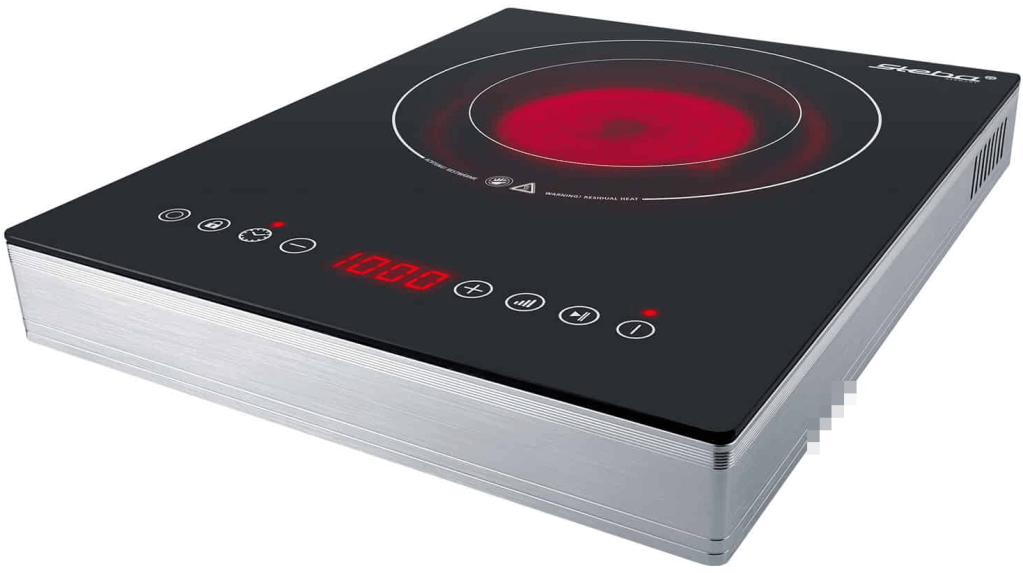
Steba HK 30, taken from https://steba.com/produkte/glaskeramik-kochfeld-hk-30

Addendum

./.

Corrigendum

./.

Charging a leisure battery at a Tesco Superstore podPOINT

Some time ago, I wrote about charging leisure batteries at EV charging stations. Today, I was charging at the Tesco Superstore in Wick and got a tip from a neighbouring EV car driver: when you disconnect and reconnect your EV charger within 15min, charging is free of charge.

So, I gave it a try – and it worked. I topped up my battery with my CCS Type2 Neutrik adapter and I was not charged a penny!

Free charging at Tesco Superstore podPOINT

Why they do this is not totally clear to me. But hey, I am ok with that.

In the video below you see our Toyota “2er” Hiace 1994 retrofitted semi-electrical vehicle being charged at the podPOINT Ralf-Milo:

Charging a 24V Eve 8s LF280K battery at an EV charging station

Electricity upgrades for our Toyota Hilux

With the next Toyota Hiace and the Saurer 2DM around the corner waiting to be converted, I thought it was time for consolidating our vehicular electrical installations.

But before going into details, some history first: In 2019, we started on the VW Calkifornia T6 with a Super B Epsilon 12V90Ah LiFePO4 battery as a simple drop-in replacement and added a Votronic SMI 1200 ST inverter to it. And this was probably where I made my first two mistakes. At that time, I decided for Votronic and against Victron Energy. And I did not pay attention to the non-existing programmability and extensibility features of the Votronic inverter.

And when we later, during the COVID summer of 2020, got our Hymer B-MC I WhiteLine and I installed a Liontron 12V200Ah battery with another Votronic SMI 1700 ST-NVS. And to make things a little more complicated, I added a DC-DC charger: also from Votronic – an emerging pattern.

Once with a vendor stick with that vendor? There a pros and cons to it as we will later see.

When we later prepared our Hilux for our first longer trip to Loch Watenan, I opted for a Liontron 12V200Ah battery again (for the reason Liontron being way cheaper than Super B). And for the inverter/charger, I went for Votronic again (SMI 1200 and the same DC-DC charger 1212-45) .

But when I tried to get the DC-DC charger working, I realised that the D+ signal was not available on the Hilux. All in all, I did not get it to work in any configuration and looked for alternatives – which came in the form of the Victron Orion-Tr Smart DC-DC Charger family. And when I had to add an AC charger (where in the Hymer I could use the existing AC charger) to load the Liontron battery “on-shore”, I chose the Victron Blue Smart IP22 Charger.

So, at that time there was some kind of tie between Victron and Votronic. And the setup was getting more complicated and more complicated. And I am not only talking about the diminishing space in the trunk of the Hilux.

If I had known about the Victron MultiPlus series at that time I could have saved me a lot of headaches and complications.

It was shortly after our first and very successful trip to Loch Watenan, when we got rid of the Hymer and I added the battery from it as a second battery to the Hilux. And I got 2 more Victron DC-DC chargers. But I sticked to my Votronic inverter. And this is how the final layout looked like:

Toyota Hilux setup with 2 Liontron 12V 200Ah batteries, 4 DC-DC 30A chargers

This all worked well end of 2021 when one of the Liontron batteries did not want to charge properly anymore. The combined cell voltage stayed low at 13.1V with no single cell near at 3.5V and the internal BMS still reported 100% SOC.

So it was time for a change. And while doing that eliminting some design shortcomings of the current installation:

  1. Invertert has a power maximum of 1200W.
  2. AC charging is limited 30A.
  3. Both 200Ah batteries are operating separated with one of them feeding the inverter and the other feeding the 12V DC sources.
  4. Each pair of DC-DC chargers is bound to a single battery.
  5. The alternator cannot feed all 4 DC-DC but only 3 chargers at the same time.
  6. The inverter cannot be controlled wirelessly.
  7. The whole system is not integrated.
  8. Fuse boxes are unlabelled fuses from AliExperss.
  9. No bus bars in the system.

So, here is the “new” setup:

  1. Replace the Votronic SMI 1200 ST inverter with a Victron MultiPlus 12/1600/70-16 Compact (which happens to have a similar form factor as the Votronic).
    • increase AC charging power to 70A
    • increase nverter power to 1300W
  2. Add a Victron 500A SmartShunt to compensate for the lack of BMS integration.
  3. Remove the 30A AC charger (to gain space for the bus bar, see next).
  4. Add a Victron 1000A Lynx Distributor bus bar.
  5. Optionally, add a VE.Bus Smart Dongle or a Cerbo GX / Raspberry with VenusOS.
  6. Have both batteries run in parallel to feed the inverter and the DC sources at the same time and thus reducing the maximum current at 1300W to 65A (when both batteries are dropping down to the minimu of 4* 2.5V = 10V) or considerably lower when running at 14V (45A) .

But the “best” of it, I then got rid of all the Votronic devices and can integrate and configure more easily with Victron. And I can do the same in the Saurer and HiAce.

I hope I can start with the conversion mid of March and will post updates on the way.

So, what do you think? (And no, I have no affiliation with Victron at all.)

Our water tanks arrived

Two weeks ago our water tanks arrived. But due to heavy winds, it was only possible to collect them last weekend.

The tanks are manufactured by Enduramaxx, but I actually ordered the tanks from JDP in Inverness, as it was cheaper to buy from them.

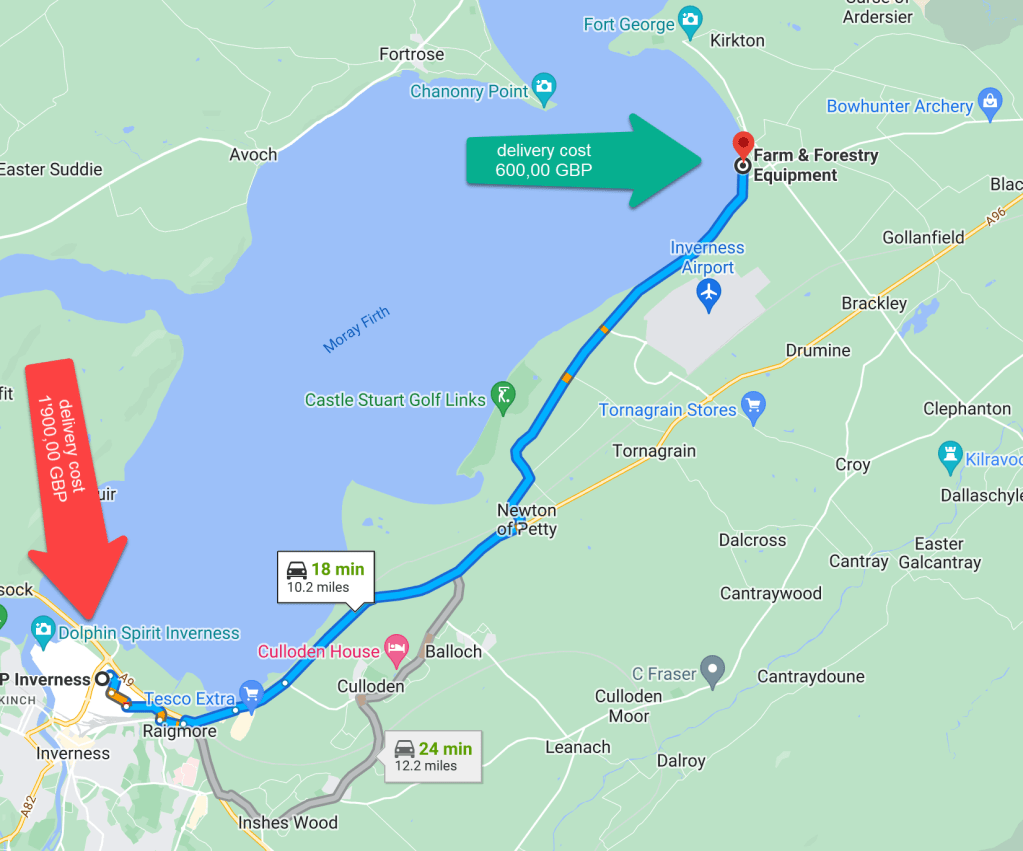
And then there were the transport cost … According to Enduramaxx or JDP, delivery cost to Whaligoe would be have been between 1’800 GBP and 1’900 GBP. Hmm, that is actually more than the price for the tanks!

Though JDP on their web site offered free delivery, there is a fine print on their web site (“Remote Areas”), stating that specific post codes seem to be exempt from it. When I suggested to them to pick up the tanks directly from their branch in Inverness (and thus saving me the delivery cost), they told me that I could certainly do that but the delivery fee would also apply. As it seems their branch in Inverness (post code starting with IV1, in the center of the city) is also considered a “Remote” or “Restricted” area.

But then funnily, Farm & Forestry in Ardersier (being 10 miles away from the JDP Inverness branch) was not considered a restricted area and could get delivered without paying a fantasy price.

A distance of 10 miles makes a difference of 1’300 GBP in delivery cost (source Google Maps)

The next interesting thing was the price of the water tank itself. The price quoted by the JDP main office was cheaper than the price of the Inverness branch – though both would buy the tank from Enduramaxx directly.

Anyway, after some weeks now the both tanks arrived. And I got 2 times the 6’000l version (instead of a 5’600l version that I originally wanted to buy).

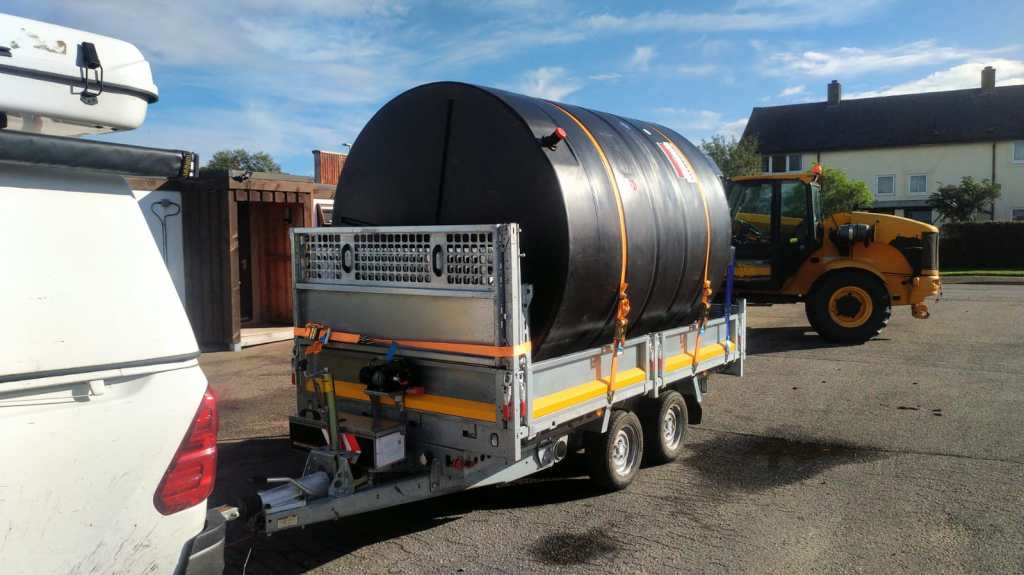
And on Saturday, I went to Inverness to load one of the tanks on my trailer. Once again, the trailer proofed its purpose. After unmounting the high side walls we could drop the tank carefully on the trailer bed.

And as soon as we have the roof on the barn, we can start collecting rain water …

Tank loaded and secured with 2 orange and 2 blue ratchet straps
Tank safely arrived in Whaligoe with 3 orange and 2 blue ratchet straps
On the way to the plot
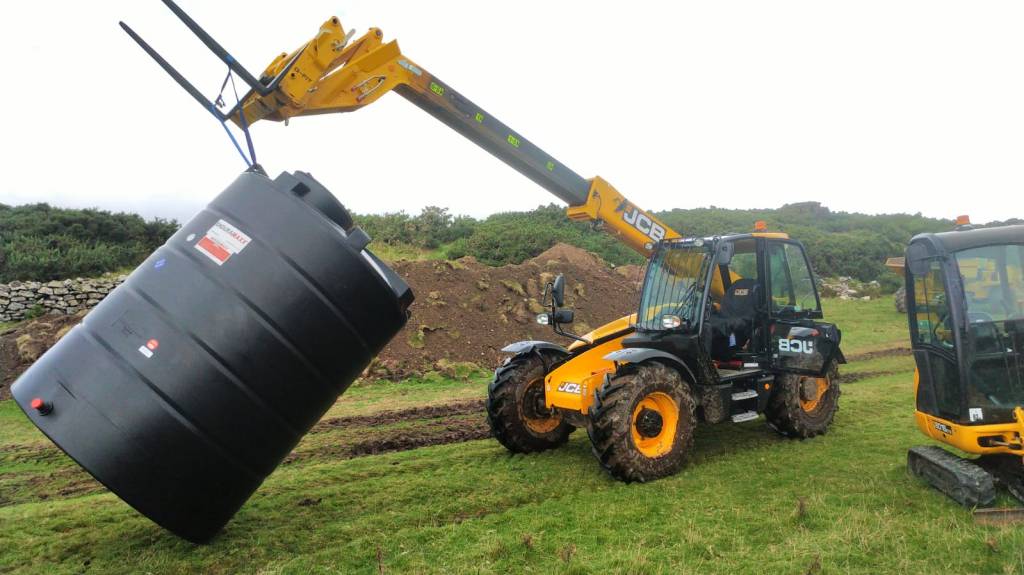
Unloading with the TeleHandler

ps – yes I had to stop on my way home a couple of times as the road surface and the resulting bouncing of the trailer was not helping at all to hold the tank in place …

Toyota Hilux 2.4D 4×4 2020 with a 250A Alternator

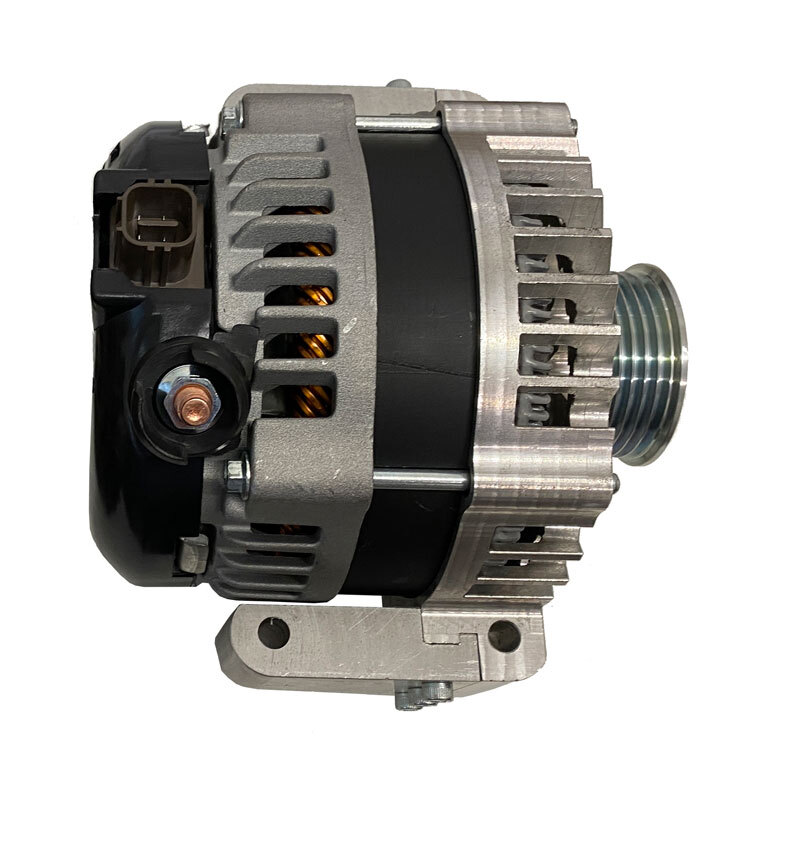
Toyota Hilux 2.4D 2020 with a Safiery 250A Alternator

Our current Hilux is from early 2020 with a 2.4D engine and has a built-in 100A alternator which is frankly quite underpowered to quickly charge our 2 * 12.8V 200Ah Liontron batteries. When I installed 3* Victron Smart Orion-Tr 12-12 30A DC-DC chargers, I could only use 2 of them at a time.

When I talked to the guy who sold us the car, to get an upgrade, I was told, there is no bigger alternator than 100A and no room for a 2nd alternator in the engine compartment. What a pity.

However, when I talked to Bruce from Safiery, he told me my Hilux could run their 250A alternator as well.

Safiery 250A Alternator

As I wanted to swap my batteries and upgrade to a 48V system anyway, I today ordered the alternator and along with it I went for a 3kW Scotty as well.

I am really curious of how this works out.

Velcro and an Android Tablet

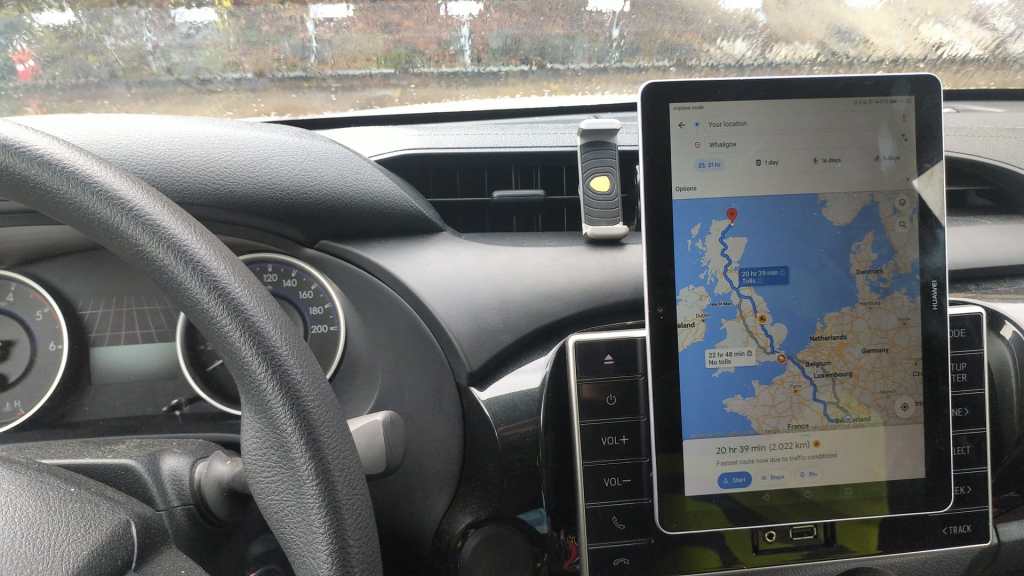
Velcro + Android Tablet = cheap SatNav

Back, when we bought our Toyota Hilux we basically got the cheapest variant we could get; meaning, that we would not have seat heating or SatNav system. Instead we got a built-in no-extras “entertainment system” with a CD player. I added some links, in case you are generation x-why-z-what-do-i-know and were obliged to pass on this pre-historic equipment.

But that now has changed! (And no, we did not upgrade to DVD.)

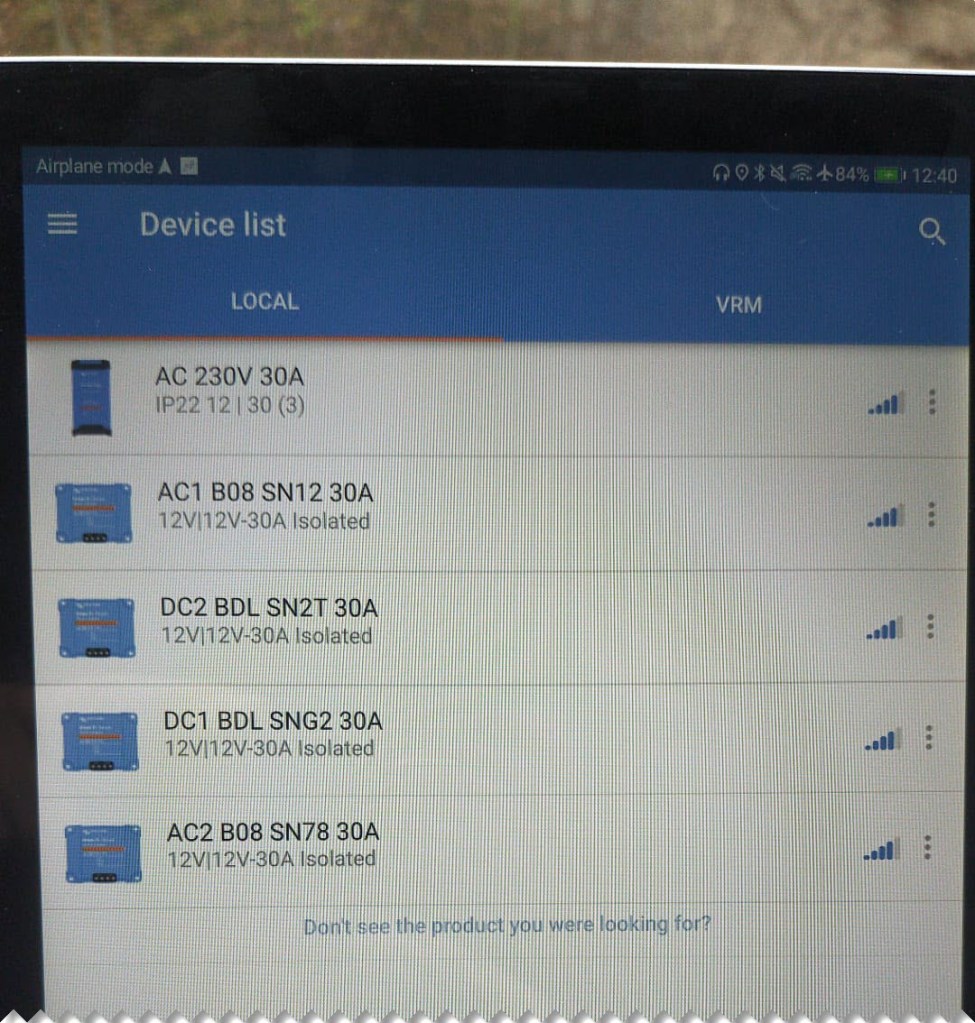
When sorting through some boxes, I discovered an old Android tablet (a Huawei MediaPad T3 7″, if I am not mistaken; with street prices around 70 CHF) that still seemed to work. When I checked, that it could still run Google Maps and connect to my Victron Chargers and LionTron batteries, I thought I give it try.

With some Velcro I quickly sticked the tablet on the screen of the “entertainment system” and the CD slot. And I must say, it looks exactly as it was built for being in that very place.

Finally, I could make use of the 3.5,mm TRS input and the USB charger on the front. However, the charger does not provide enough power to charge the device. It just prevents it from discharging. So maybe, I still have to use the charger at the 12V cigarette output.

On the other hand, my onboard monitoring capability greatly improved, as now all my apps are much better readable due to the larger screen.

And now the cables:

  1. I used a 3.5mm TRS male to 3.5mm TRS male cable (originally from my JBL BoomBox 2) that just fitted.
  2. An short MicroUSB to USB-A cable with cable ties.

But to all this good news there is one caveat: now, I do not have a CD player any more.

First night on the loch

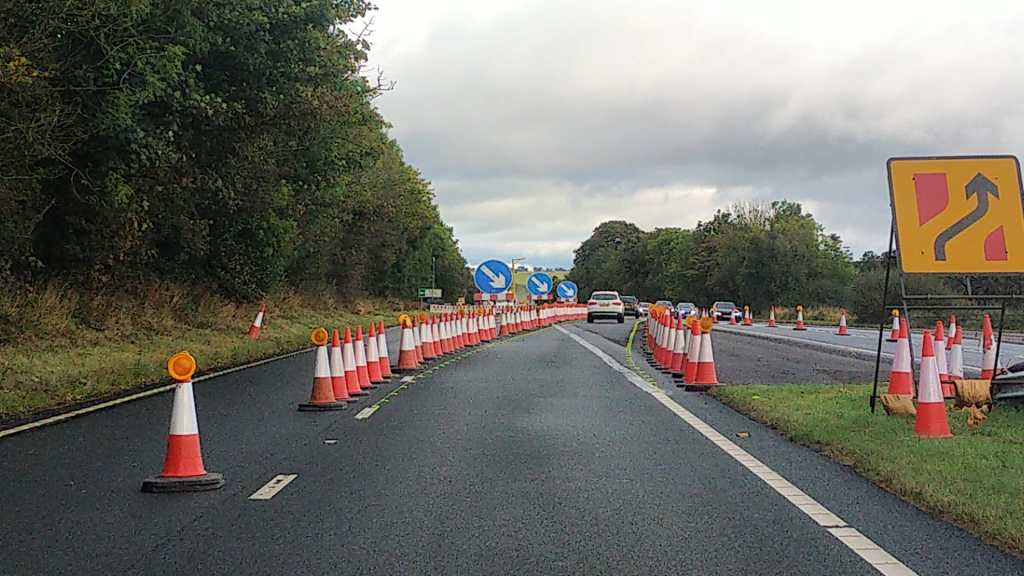
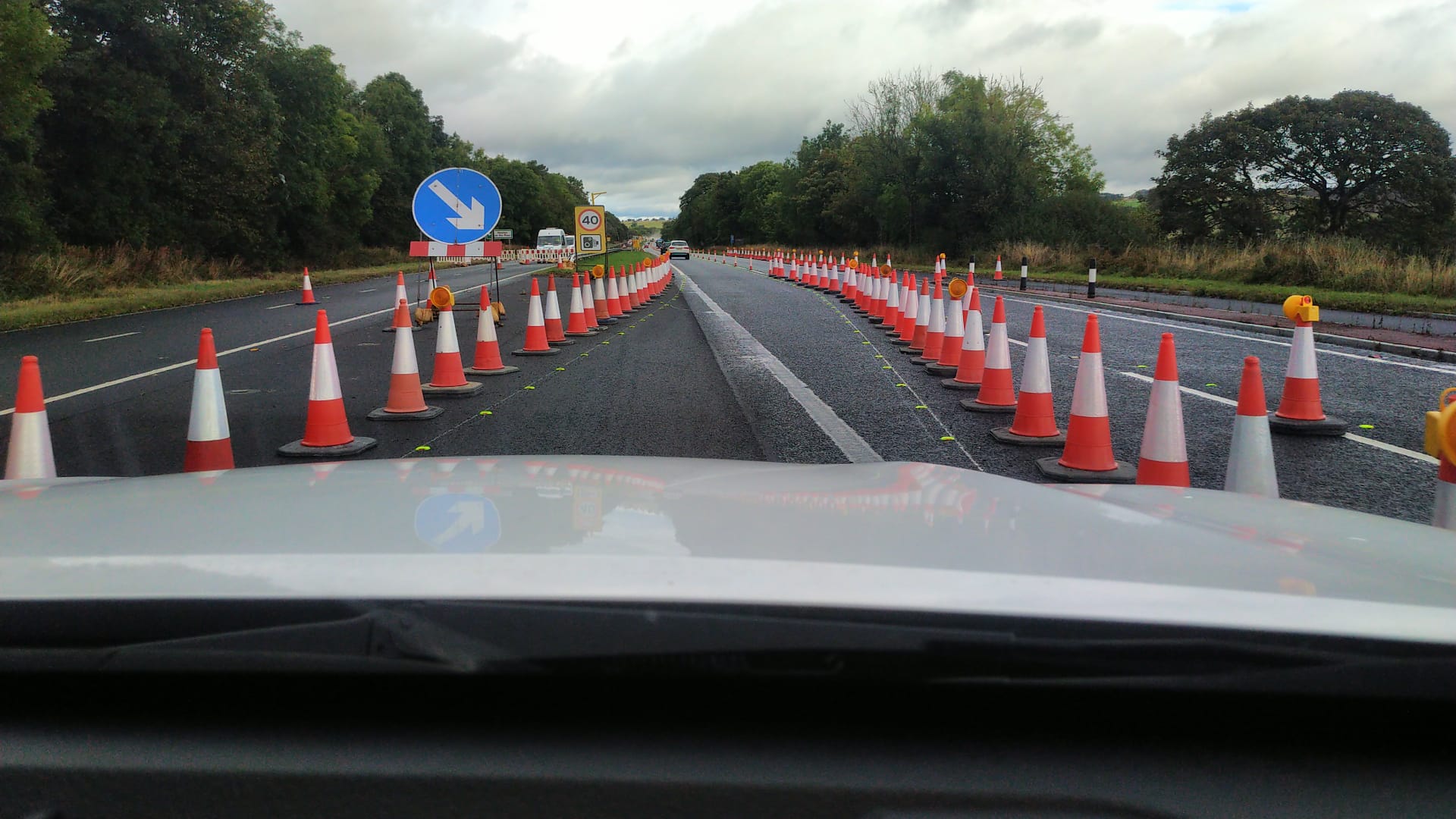
So we made it up to Caithness. The road was good. We were once more surprised at how serious the Britts are about those traffic cones. They not only mark the way with them, they litteraly build walls with those things…

Before arriving in the UK, we have been worried about the fuel shortage, we read about in the news. This is why we decided to first leave the bigger cities behind us, before trying to find diesel. Turns out, there was no problem really. The very first gas station we tried, had fuel and not even a line of waiting cars. So we took that for a favorable sign and continued our journey north.

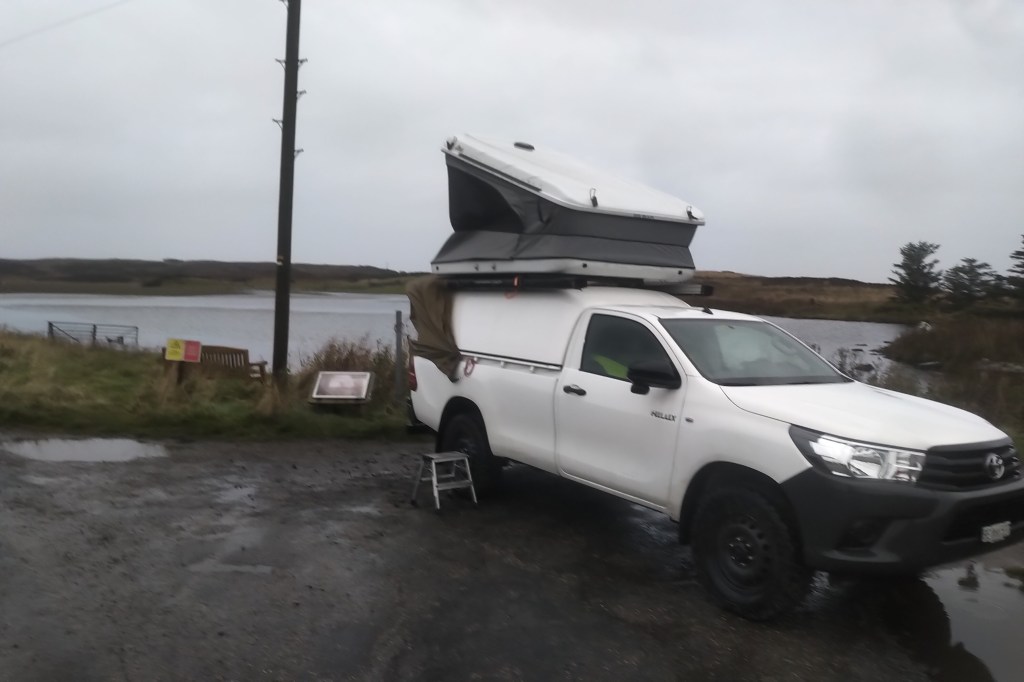
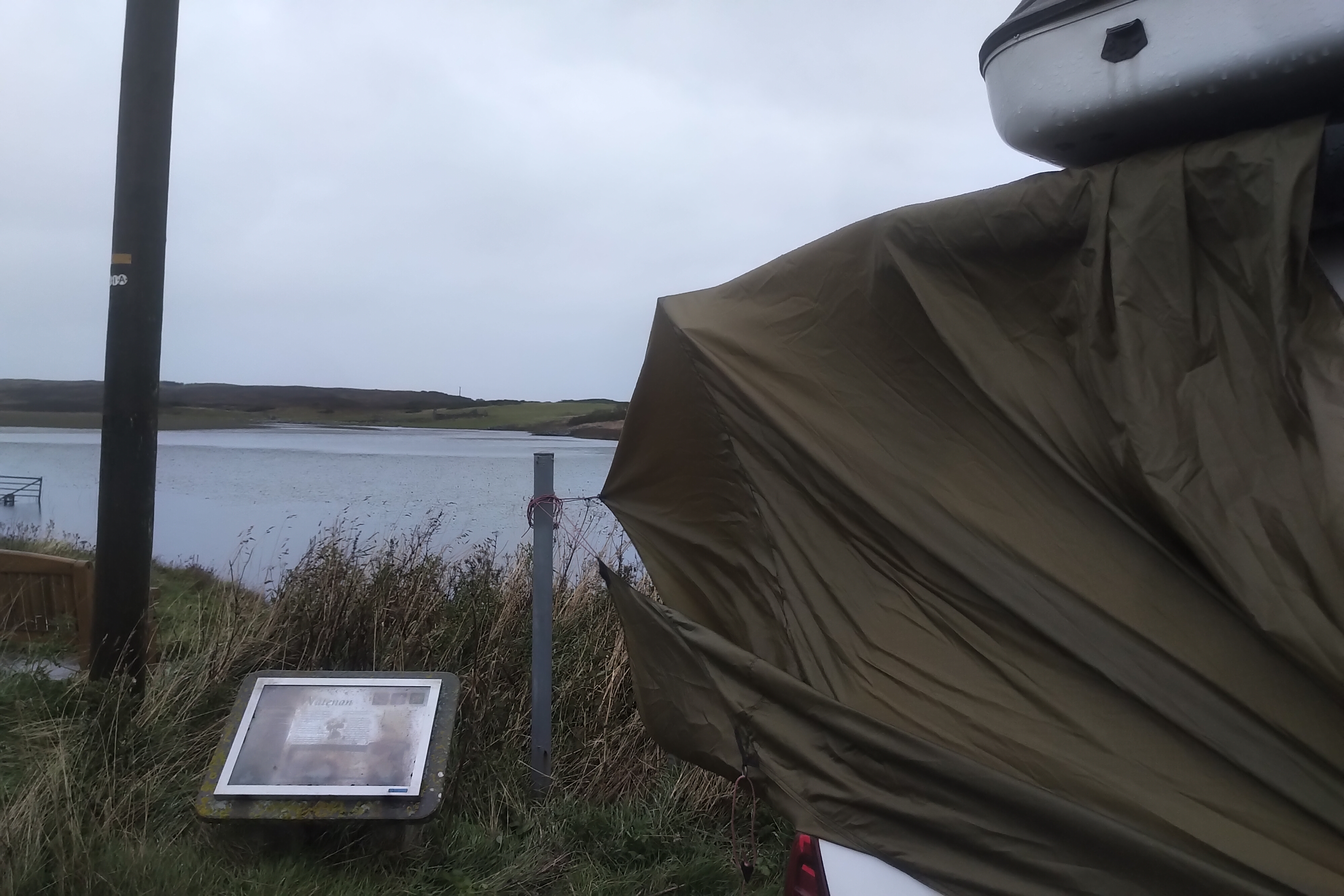
Loch Watenan welcomed us with some rain but also with the most heartwarming hello from our neightbours.

Having learned from our last trip, we did NOT try to drive on our plot by night without knowing the state of the ground. This is why we stayed over the night on the parking space south of the lake.

The night was calm and clear, allowing us to see an amazing starry sky.

(OK, you might need some imagination for that one…)

And right now, the day is breaking in a breathtaking manner on Loch Watenan…

Finally back to Scotland again

As Scotland eased its restrictions for entering the country, we finally are able to go back to Whaligoe without having to spend a 10-days in self-isolation. So we are preparing our next trip. As the weather seems to be better than last time, we will give it a another try with our pick-up to see, if we can make it this time without getting stuck again.

The last it looke somehow like after the recovery with tractor and cable winch:

This in turn means, we will again take the ferry from Amsterdam to Newcastle with a night on the sea. Time-wise it takes longer than to go through the tunnel, but hopefully less stressful.

The good thing about taking the car is, we can bring a lot of stuff with us such as a Raclette “oven” and have a real Swiss Raclette at the Loch. Plus, we will be trying out our new Brompton Bikes to test the route from Whaligoe to Wick.

As it currently seems, we have to conduct a PCR test two days after arrive. According to gov.uk a new test centre opend in Wick. We will try that out …

So, let’s hope the situation stays as it is and we are able to go to Whaligoe soon.