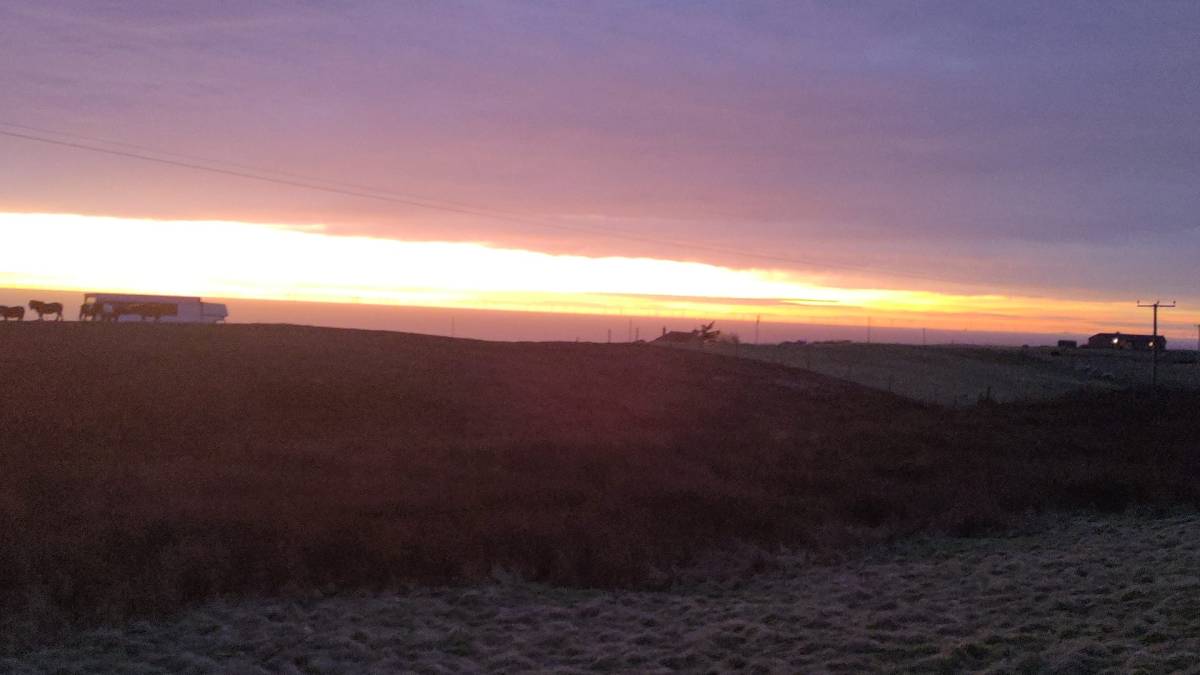
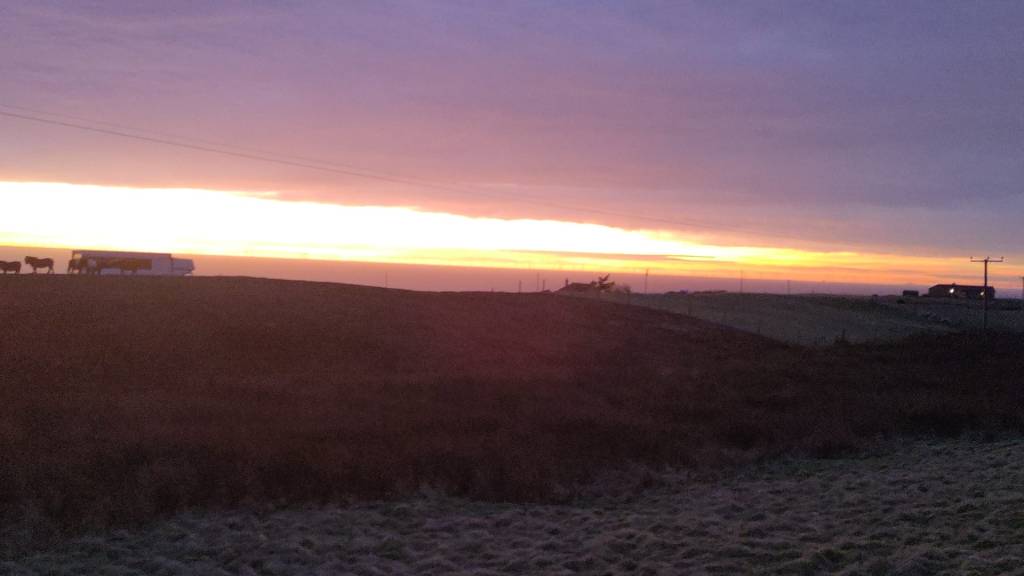
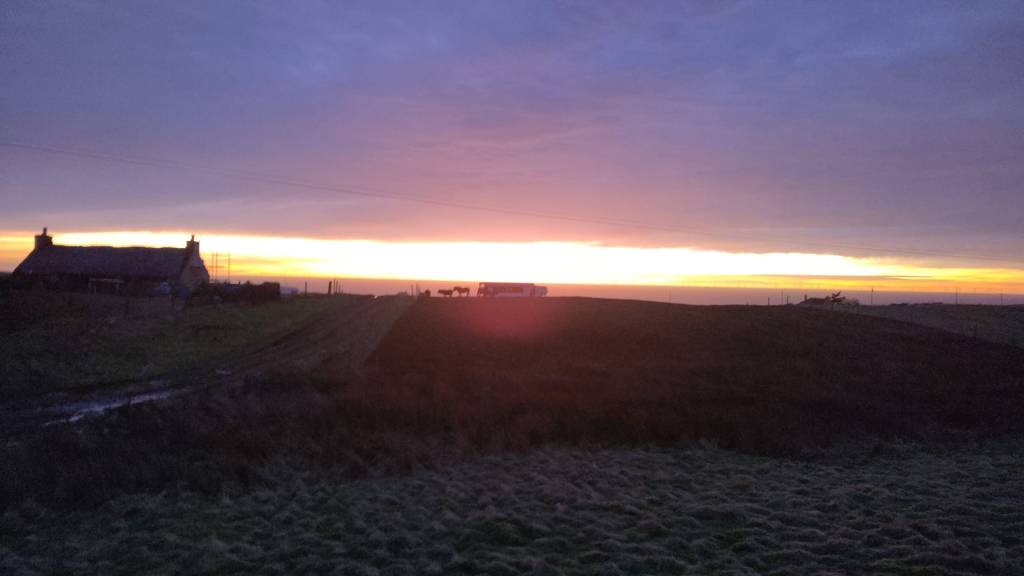
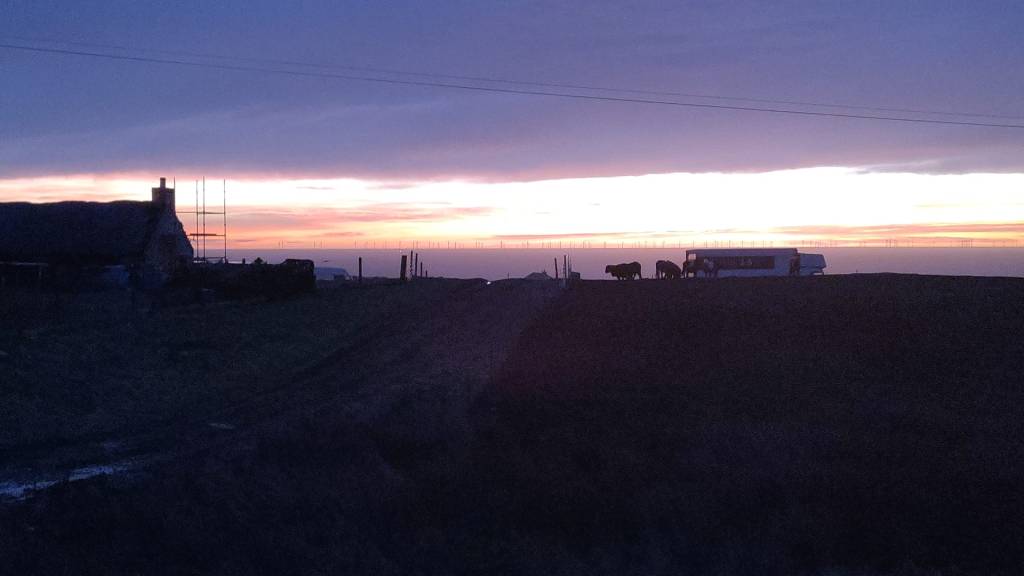
Thursday is bin day for where we are. So, on my way to the main road across our neighbour’s plot I came across this stunning view which my phone camera hopefully truefully captured. On the right (toward south-east), we can see the newly installed turbines south of the existing Beatrice wind farm.
Func fact: despite all the power off-shore, the electricity line you see running through the pictures (from north-to-south, left-to-right) seems to be only an 11'000V line shared by all the houses along the coast with 3-phase power generally not being an option up here but frequent power-cuts included as part of the service level agreement.
For certain tasks or jobs in the United Kingdom a trades worker is required to have a “Construction Skills Certification Scheme” card – CSCS for short. Primarily targeted at the construction industry and not being a legal requirement a worker might still need this card even when working in different sectory such as electricity or plumbing. Actually not this card, but some card – as they come in different types and colours (see below).
But it does not end there. The UK being the UK not only has one body to award these cards but a whole CSCS Alliance working under the recommendations of the Construction Leadership Council that currently (today, 2025-01-12) seems to consist of 38 (sic) members. That means that your card could come from CSCS, SKILLcard (which have also all sorts of colourful cards, see image below) or from ALLMI, the Association of Lorry Loader Manufacturers and Importers, that only offer a white card.
And the hat goes deeper. With Scotland, Northern Ireland, Wales and England, all being a nation in the Kingdom (first question every aspiring plumber must answer, for those who know), they certainly operate different schemes for electricians, plumbers and the like (sometimes combined, joined, separate, you name it). Examples:
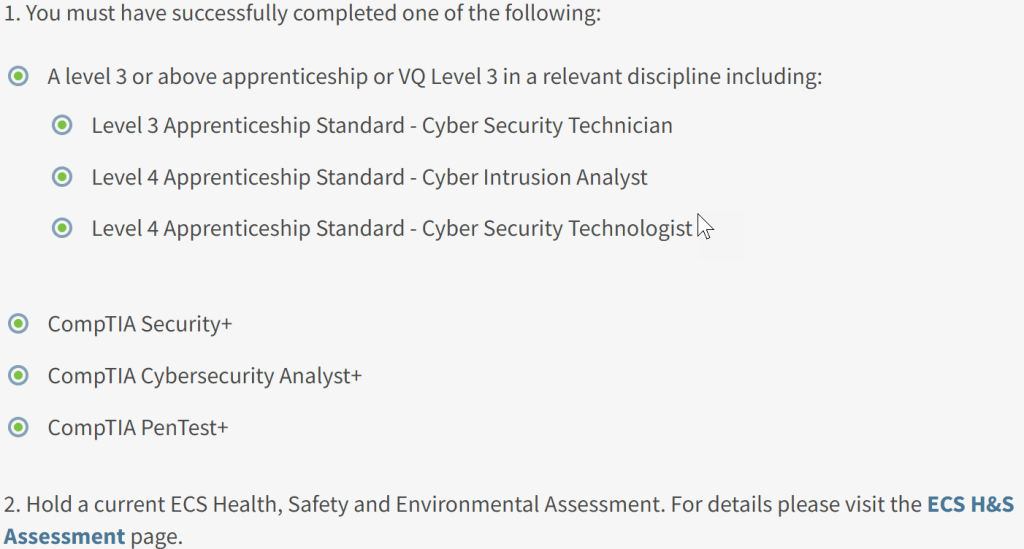
All these cards differ – sometimes more, sometimes less. E.g. the Electrotechnical Certification Scheme of the JIB offers a “Gold Card” (Digital Security Technician) with some relatively easy entry requirements, such as a CompTIA Security+ certification. In contrast, a plumber would need a Level 3 NVQ and some years of experience to be admitted for a “Gold Card”.
Side note: the Electrotechnical Certification Scheme in Scotland (SJIB) does not offer this type of “Gold Card” and you can only apply for it when you have an address in England.
Digital Security Technician – Eligibility and requirements
But of course, if you do not want to go for “Gold” and are happy with a “White Card” as a Professionally Qualified Person there seems to be a a much easier route:
You simply join the British Computer Society as a member (optionally by providing “evidence” of some over-sea qualification) and then apply for the “White Card” with CSCS.
Except – for this PQP we do not need to prove our knowledge to CITB, an independant testing provider, and achieve a 90%+ score to pass the test as everyone else. We are professionals (the hint is in the name) and therefore may take a self-invigilated exam with the Construction Industry Council (CIC): the CIC Health & Safety Certification. This consists of a learning web site at the cost of <50GBP where we study everything we need. And after that, we take the exam “closed book” and a work colleague of yours makes sure you do not cheat. After all – we are professionals.
So, in the end we get a “White Card” with the CSCS logo as “proof that individuals working on construction sites have the appropriate training and qualifications for the job they do, thereby helping to improve standards and safety in UK construction” (https://www.cscs.uk.com/). Glad to read.
CSCS cards – “proof [for] appropriate […] qualifications […] helping to improve […] safety in the UK”, https://www.cscs.uk.com/
Once in a while, our cat travels with us to Loch Watenan. And in this article, I summarise what paper-work is needed to get the cat in one piece to the UK and back to Switzerland.
And our cat is 10+ years old. For young cats and other pets different rules apply.
We have two main travel routes:
CH – (entering via car) DE – NL – (via ferry) UK UK – (entering via ferry) NL – DE – CH
CH – FR – (entering via train/tunnel) UK UK – (entering via train/tunnel) FR – CH
First, for entering the EU from Switzerland (a non-EU country) we need
a Swiss Pet Passport (which is equivalent to the EU Pet Passport);
a microchip;
vaccination against rabies (after you got the chip, not older than 3 years);
a recent letter from a Swiss vet stating the overall health of the cat (not older than 10 days);
a written declaration completed by the owner or an authorised person, stating the pet is not for import (never had this checked);
no tapeworm treatment is needed for cats.
For entering the Netherlands from Germany no additional documents are needed. This might change if you are not in transit but stay longer in Germany. I do not know.
At the ferry in Amsterdam, you need to show the documents and supporting material for entering the United Kingdom:
the Swiss Pet Passport;
read the microchip and have it compared to the number in the passport;
the letter from the CH vet.
From there we can freely transit through England into Scotland and from there into the Highlands. For most of the time, without any additional border controls.
But on the way back to Switzerland, things are a little bit different.
The EU does not accept the Swiss Pet Passwort when entering from the United Kingdom (except for Northern Ireland). And as we cannot get a EU Pet Passport we need a recent (not older than 3 months) EU health certificate, demonstrationg the overall health of the cat and the ability of the vet to tackle a very complicated online form:
Transit through Germany does not seem to have any additional requirements,. And for entry into Switzerland we can again use our Swiss Pet Passport (but this has never been checked when I entered).
So, this will be another rant about online retailers and their delivery strategies in the Highlands.
A couple of days ago, I ordered _the_ missing piece for our barn: a washing machine. Having had good experience with Siemens, I went for a similar model that I already have in Switzerland, the Siemens iQ700 WI14W502GB. I wish I had that iQ. chapeau to Siemens product management and markting.
As I found it relatively hard to find Siemens retailers in the UK for that model, I ended up with John Lewis & Partners. Never heard of them before, but as it seemed they were an official Siemens reseller.
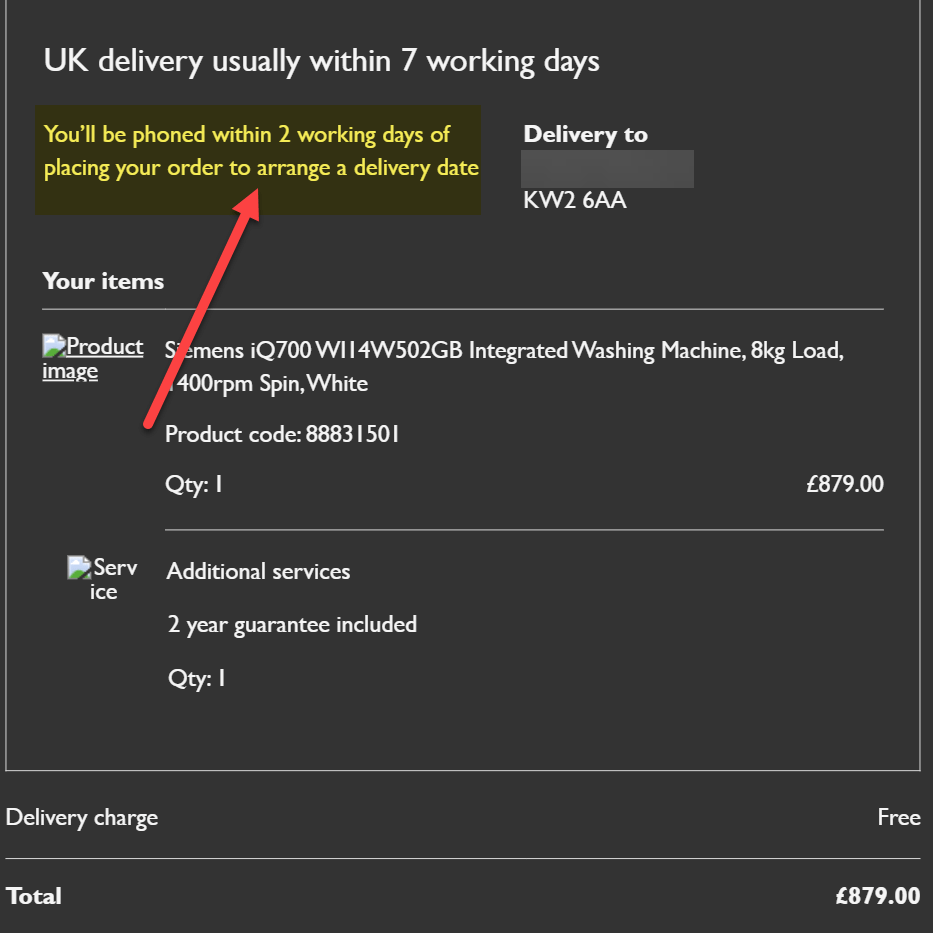
During order and checkout, I was told that the item would be delivered _usually_ withing 7 working days. Of course, the word “ususally” usually leaves room for variance and interpretation. And I got a “free delivery” and assurance they would call me within 2 working days after the order to arrange a delivery date. No “usually” there.
Order confirmation email from John Lewis & Partners
So, what happened next? I never got the promised call, but after a couple of days, actually after 7 working days, I received another mail telling me the item had been dispatched. So, no arrangement of a delivery date.
Item dispatch notice after 7 working days
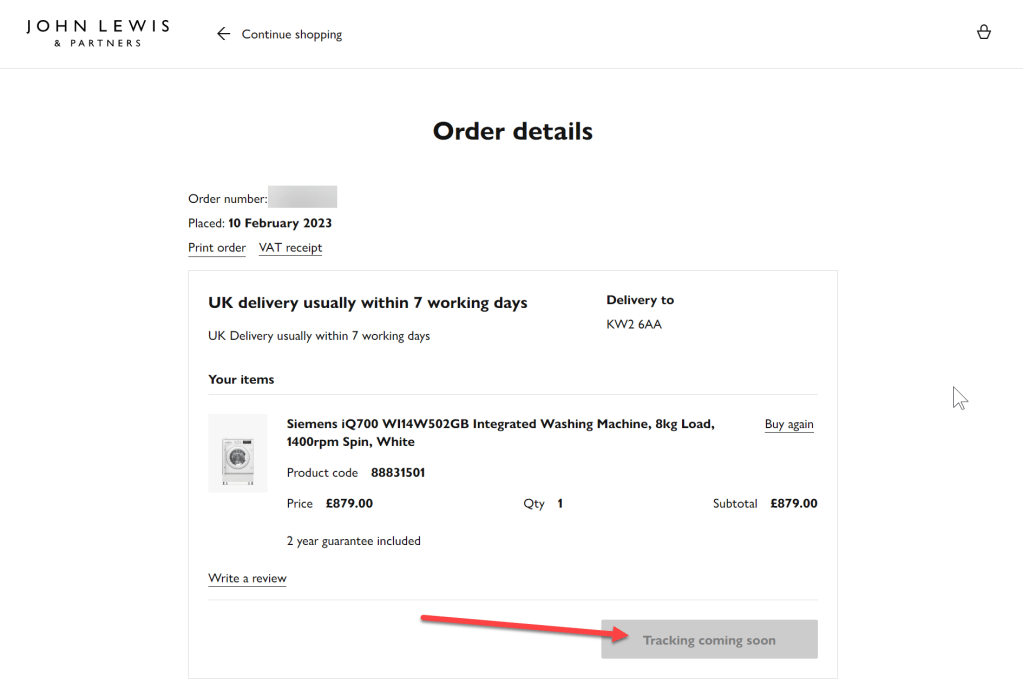
So, I waited another 24 hours as noted in the email to get the tracking link, so I could see in advance when the item was supposed to arrive. No luck that. Every day I checked the link, it only said “Tracking coming soon”.
John Lewis order details and no tracking link
Surprisingly, today I got a phone call from a delivery guy, telling me he was about to deliver an appliance. Unfortunately, I just left the property for some other tasks.
Now, less than 2h later and 10 working days after my order, my neighbour received the washing machine for me – with the tracking information still “coming soon” and me having to move the machine later on to my plot.
I would have thought that online retailers in 2023 could do better. – Hmm wait, I actually know online retailers that do better (for years).
Any “Customer Happiness Engineers” at John Lewis & Partners reading this?
And this is the end of today’s story about the delivery of a washing machine in the Highlands.
We tried something new and created a Twitter account as an addition to our blog and the videos on YouTube. Yes I know, I am over 40 and start “twittering”. But anyway, for quicker updates you can now also see here what’s happening.
After our very adventurous trip at the end of the year 2020 we have been waiting for the covid situation to get better and allow us a next trip to our future homeland.
Now we are ready and will be leaving on the 1st of October for the north.
We learned from our past trips and have been updating our gear. For instance, we bought a great 4-seasons tent from Hilleberg, that can be pitched completely without external gear. And we built a little terrasse for the roof top tent, where we can for instance store the diesel heater. Also, Ronald offered me the best Quilt possible. It is made for temperatures down to 20 degrees below zero. So, it is for the first time really a realistic possibility, that I won’t feel cold during the night.
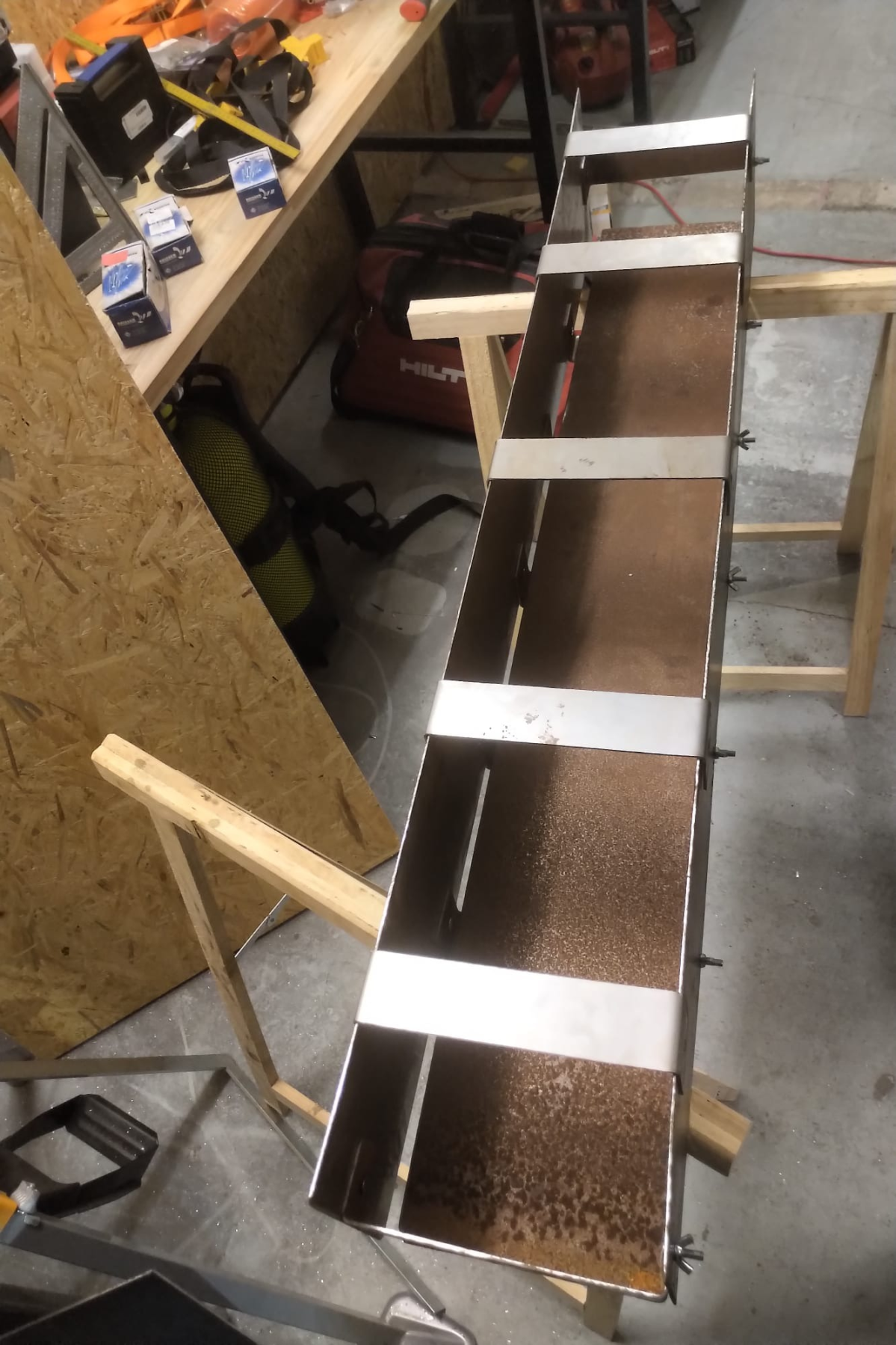
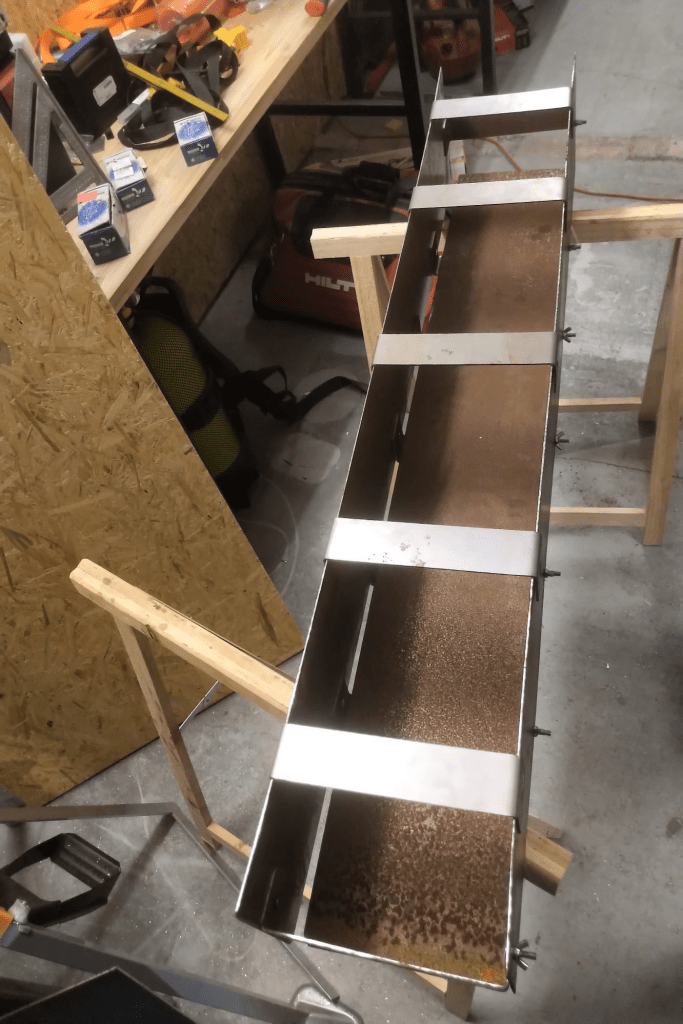
This time we plan to really meet all our neighbours and invite them to over for a Raclette. To do so, Ronald constructed a wilderness Raclette oven.
With this nice construction we will be able to feed 20 people with molten Swiss Cheese.
But of course, that is not the only plan we have. We bought fantastic Brompton bikes and are planning to test them on the route from Loch Watenan to Wick and back.
Apart from that, I have been preparing myself mentally for a new encounter with the wild horses on our land. Last time I was really afraid, and the stallion might have noticed that, which lead to him behaving even more crazily. This time, I will try to not show any fear and I also bought a bear whistle, that might help with wild horses also. I will write an update on how that worked out…
But for the moment, we are getting together our gear because in the tomorrow we will leave around 5 in the morning to reach the ferry in Amsterdam in time.
One minor problem we might encounter before arriving in Scotland on Sunday: UK has seen some shortage in gas. Therefore we can’t be sure to find a place where we can fuel up while in England. But hey… it wouldn’t be our trip if it was not an adventurous one, would it? So, we will walk that bridge, when we arrive there….








 Our Journey to Scotland