Heating water with an immersion heater and thermos flask

Today I will task about how we heat water in our Toyota or caravan with a relatively low power consumption.

For this, we use an immersion heater that has a nominal power consumption of 1000W. The water is inside a one liter steel thermos flask. Be careful of course not to fill it up too much to prevent the boiling water of sparkling out of the flask.
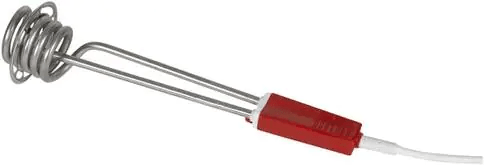
Prosper Tauchsieder Real (image from galaxus.ch)

The water here has an initial temperature of 20°C (68F) and takes around 5 to 5 1/2 min to boil.

We successfully used the heater with different inverters. It also worked well on a relatively small model, like the Votronic 1200W and the 12V 200A Liontron battery without any issues.

There are even immersion heater models with lower power consumptions – often with a “portable” denomination. But of course it will then take accordingly longer to boil the water. But it might make sense if you have a smaller battery system or inverter. And there are DC models as well, that can be attached directly to a battery without an inverter at all.

But the main point for us was that this immersion heater just fits perfectly into the flask (after we removed the metal ring you can see on the picture). So after boiling, we can leave the water inside the flask without the need for an additional pot, and without having it to pour from one pot to the flask either.

The heater has a small plastic hook that it holds it in place. So it does not touch the bottom or any side of the flask.

After use the device is certainly hot, but it cools down quite quickly. If you use the water and empty the flask right away and do not have a proper surface on where to cool it, you can stick it back into the flask for cooling off.

And when not in use, the water heater takes nearly no space at all, or at least much less space than a normal electric water heater.

Two years ago, this water heater cost us roughly around 25 CHF. This is (today) around 25 EUR or 22 GBP. We got it from Galaxus, a swiss online shop. But we have no affiliation with it at all.

This model is called “Prosper Tauchsieder Real“, whatever this means. But as I said, there are plenty of different models out there.

Don’t forget to unplug the heater after use as it doesn’t have a sensor to detect when the water is boiling. The description however says, it has a dry detection feature. But I really never tried that out.

So this is it for today.

We got the “Planning”

Today, we got the planning for our barn. Actually, we received the positive decision for a “prior planning notification” (which is certainly not a Planning Permission), as in Scotland there is no need for full planning permissions when building agricultural sheds.

So, this went really well! And now we can do the next step. That is: ordering the actual building kit which will be delivered from Robinsons Agricultural.

The barn will be a metal construction of 30m x 10m with an eaves height of 5m. We will be starting this week with the foundation and the levelling work.

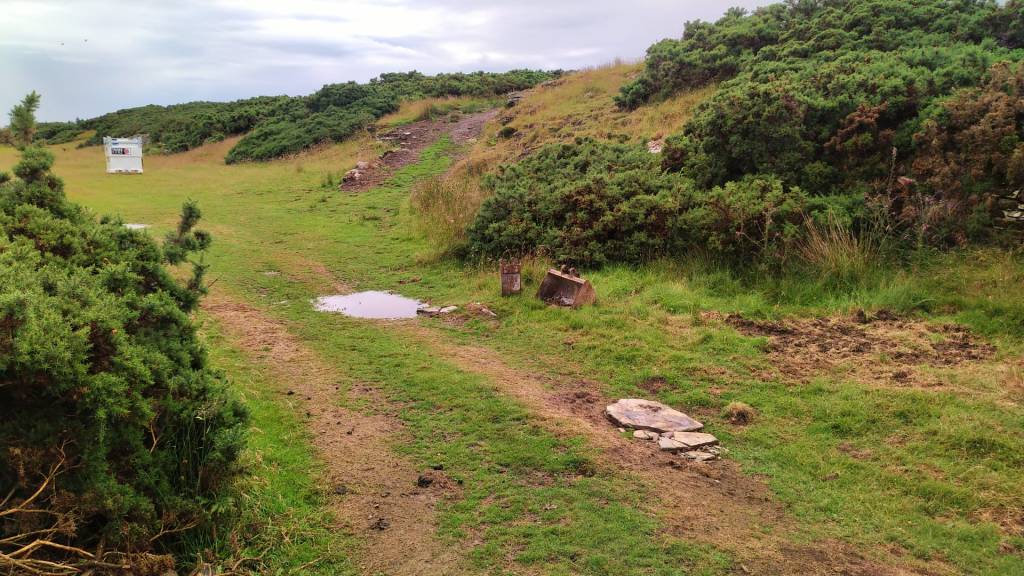
The building site (to the left hand side of the image)

Can’t wait to post updates on this one …

Cat Walk – Hike Training with Our Cat

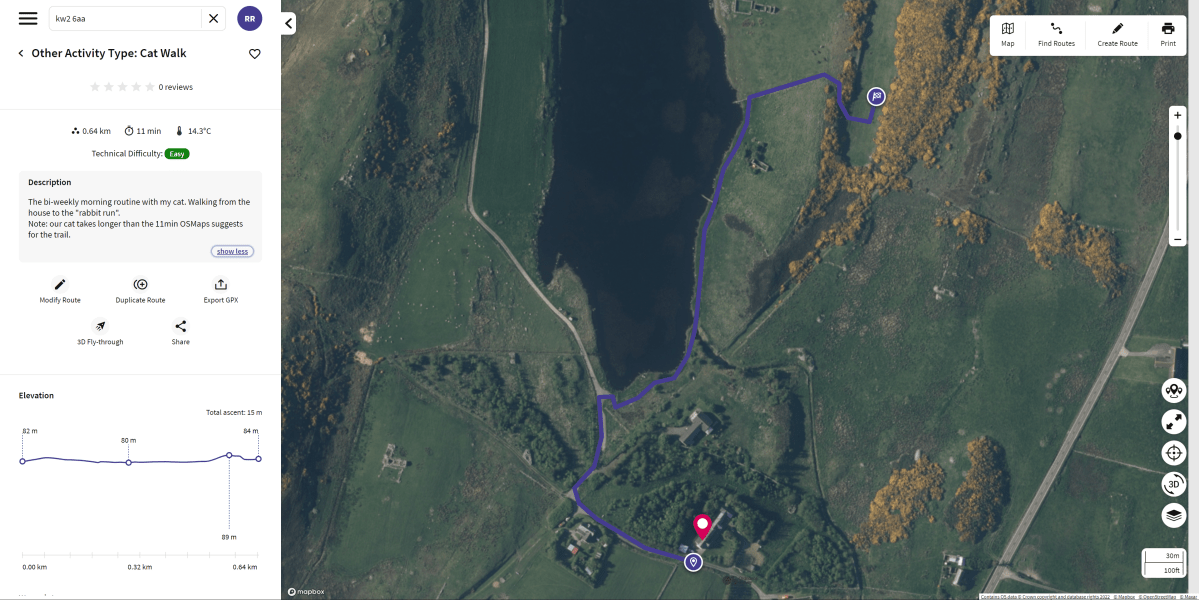
As part of our training excercise for the upcoming hike our cat and I regularily walk from the house to the part of our plot that some locals call the “Rabbit Run”.

Back and forth this is a good 1’250m, after which the cat sometimes needs to take a break.

Here is the route in OSMaps.

Hike Training with Our Cat

You can also consider this video as my contribution to the never ending world supply of cat videos on the internet. Hopefully, this remains an exception.

Sizing Water Consumption and Storage Tanks

With the nearest water connection more than 500m away and crossing a main road plus multiple neighbours’ grounds, we decided to go for a rainwater collection and filtration solution.

So be prepared for a lot of numbers in this post.

In order to size such a system, I first tried to find out the demand of (drinking) water we would have on our plot.

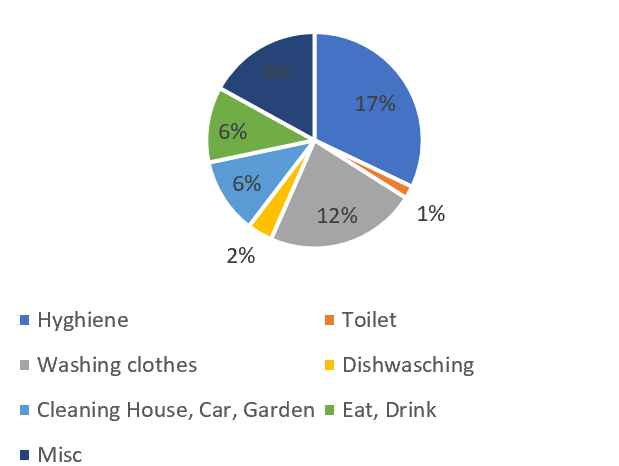
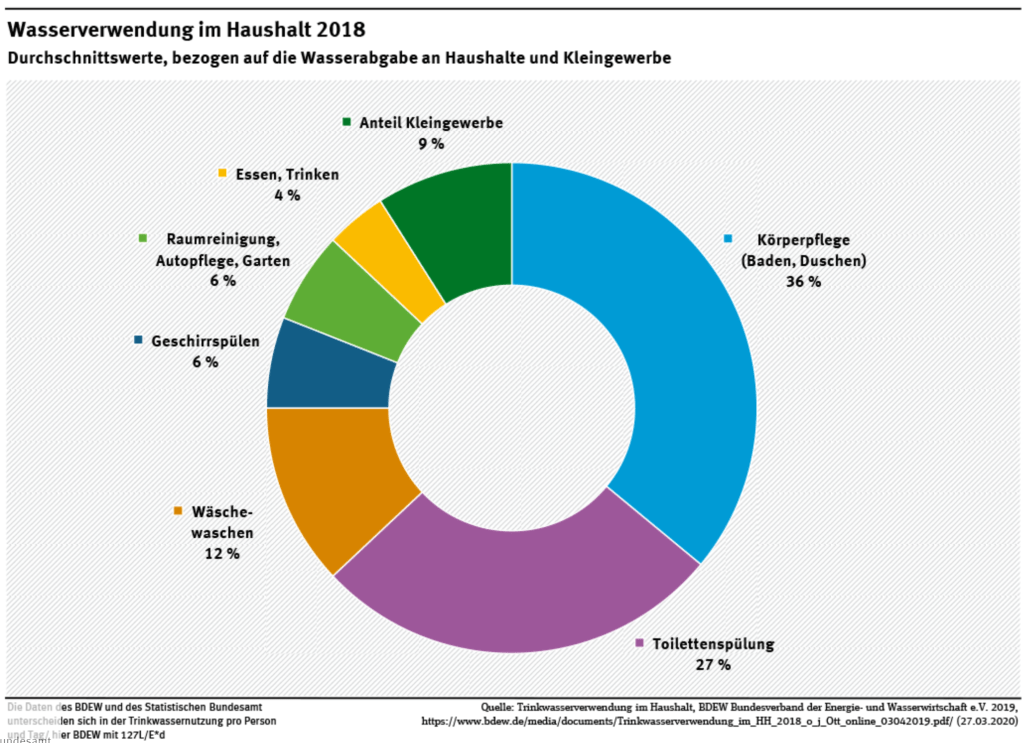
According to a publication of the german Umweltbundesamt every person in Germany used 123l of drinking water per day.

This breaks down to the following parts as seen in the following picture:

Source: BDEW 2019

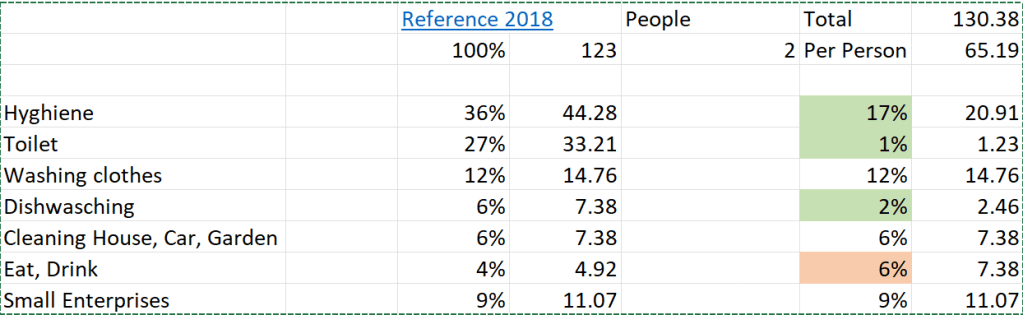
I adjusted the numbers slightly to what I would expect in our environment (for example, as we are using a composting toilet we need nearly no water for the toilet, but I left in the 9% for small enterprises). Percentages in green are estimated less than the provided statistics and percentages in red estimated higher than the statistics:

Summary of water consumption

This gives us a distribution like this:

Estimated Water Consumption Distribution (65l)

I then calculated the demand for 2 people of several periods of time:

Demand and Supply

So I came to the conclusion that our 2 people household would roughly need 50’000l of drinking water per year and that with a standard 1000l IBC we could last approximately 7 days (which I the amount of water we can easily carry in one go with the TeleHandler).

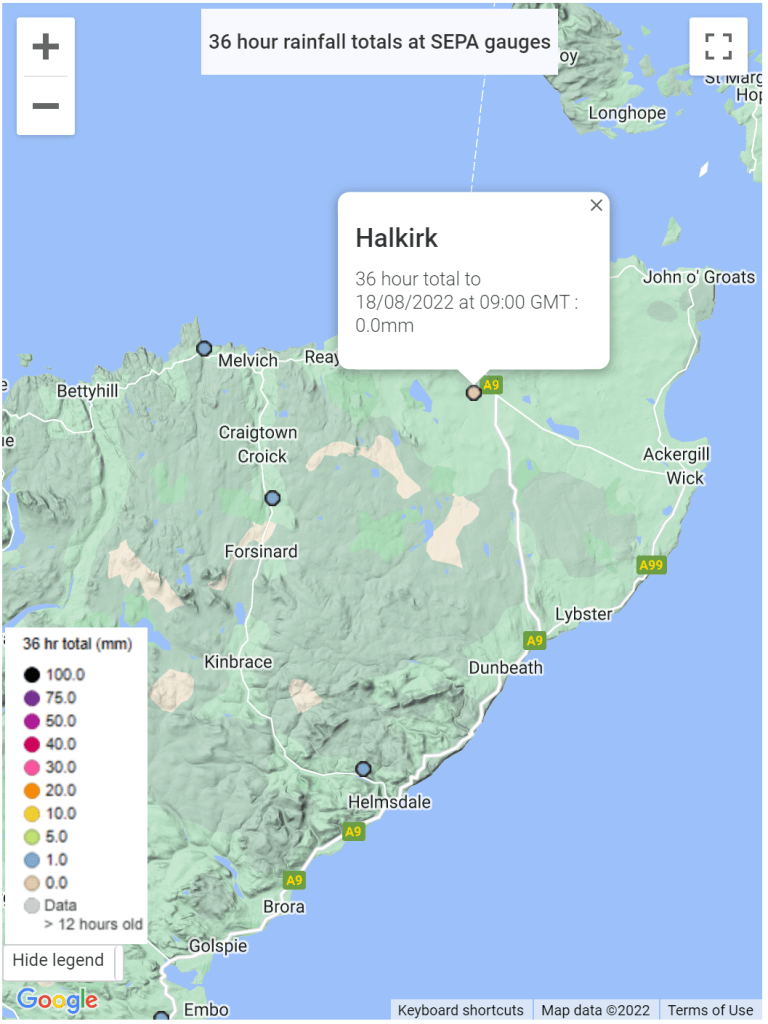
I then went on to the SEPA web site to find information about rainfall data in the area where we are. Unfortunately, the nearest data points on their map are either Halkirk near Thurso or Kilphedir near Helmsdale.

Image from: SEPA Rainfall data for Scotland

Among the various statistics they provide they list the actual rainfall in mm/cm2 for the last 12 months:

SEPA web site Rainfall data for Scotland

I projected the numbers from this chart to the size of the roof of our barn (roughly 310m2) that would act as our water collection surface:

Estimated rainfall

So even during the last driest months in the last year (June: 8’520l and March: 6’240l), we expect still be more than enough rain (> 4’000l) to supply us with water.

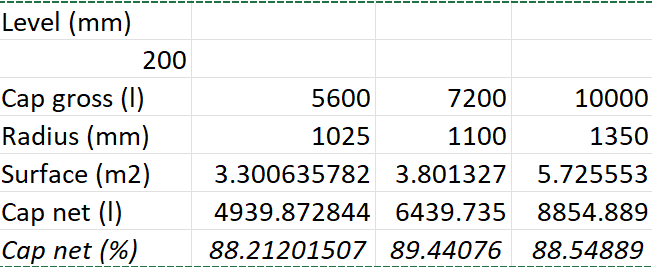
And now to the sizing: As I do not want to empty the tanks completely (there is always some sediment or dirt at the bottom of the tank), I want to be able to leave approx 20cm water level in the tanks.

I looked at the dimensions of water tanks from different suppliers and found these dimensions for the sizes of 5’600l, 7’200l, 10’000l:

Tank sizes and net capacity

So even with a 5’600l tank I could “survive” for a whole month and still had left 20% for increased demand while always leaving 20cm of the water in the tank. And with a lifting capacity of at least 1’250kg we can still move around such a tank if required.

So my sizing conclusion would be to get two of these 5’600l tanks (so one tank could always go into maintenance or act as a backup) and and have two 1’000l IBC tanks for emergency water transport.

Depending on the water tanks and its certification this would cost approx 2’500,00 GBP (without delivery fees or hoses and the like).

Did I miss or forget something? What do you think?

ps – below you find the podcast version of this blog post:

Swift Sprite Major 4 EB off-road edition

We decided to get ourselves a caravan as a shelter on our plot as long as we do not have anything else to hide in. And yesterday, it arrived.

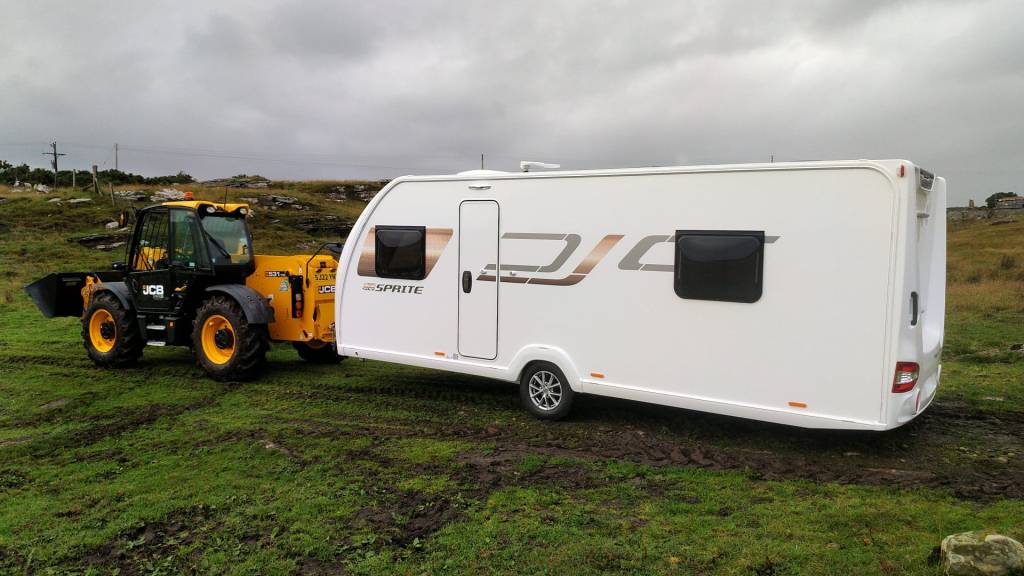
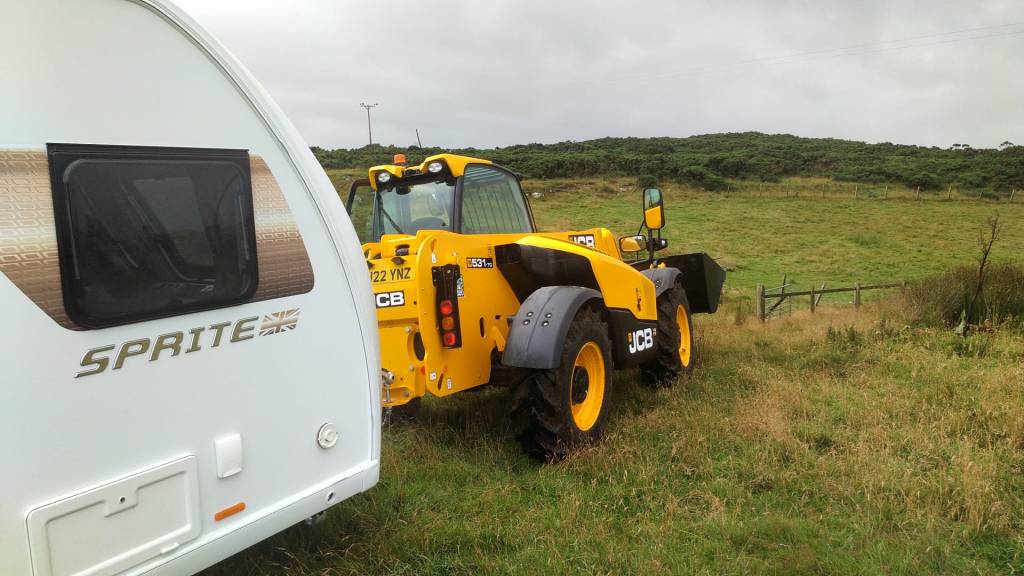
We decided for a Swift Sprite Major 4 EB, which is a caravan with a separate bedroom, living/cooking area and a toilet and shower in the middle of the caravan.

However with a total length of approx 7.5m and only a single axle, it only has limited ground clearance (with limited meaning really limited).

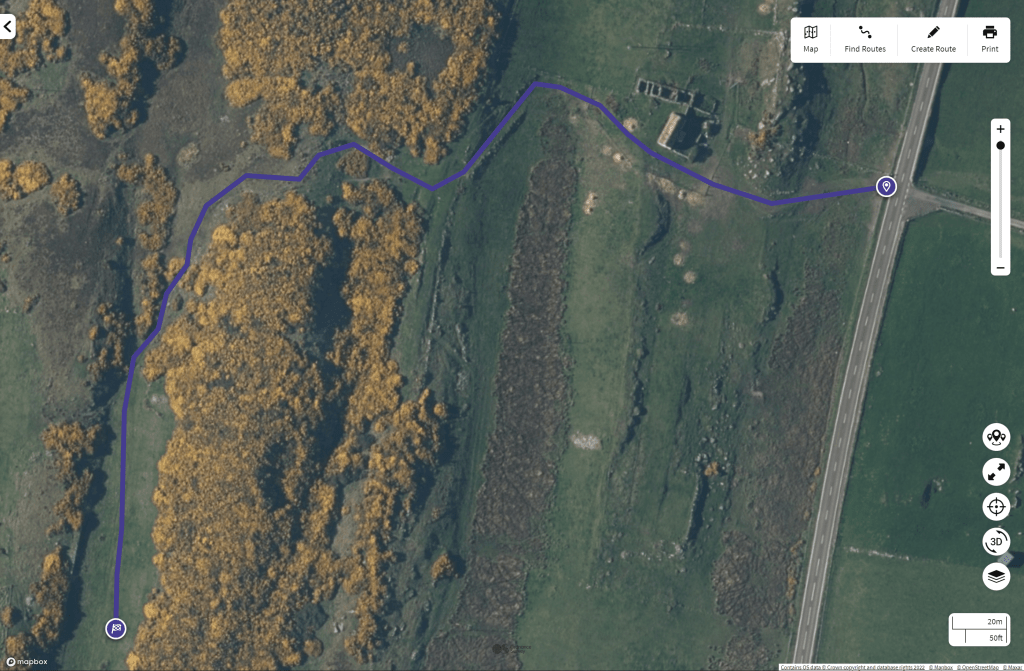
The route (from OS Maps)

Sneak preview: we made the 450m in roughly 4 hours whiche equates to an astonishing 0.1125 kilometer per hour. In the image above you see the route we took.

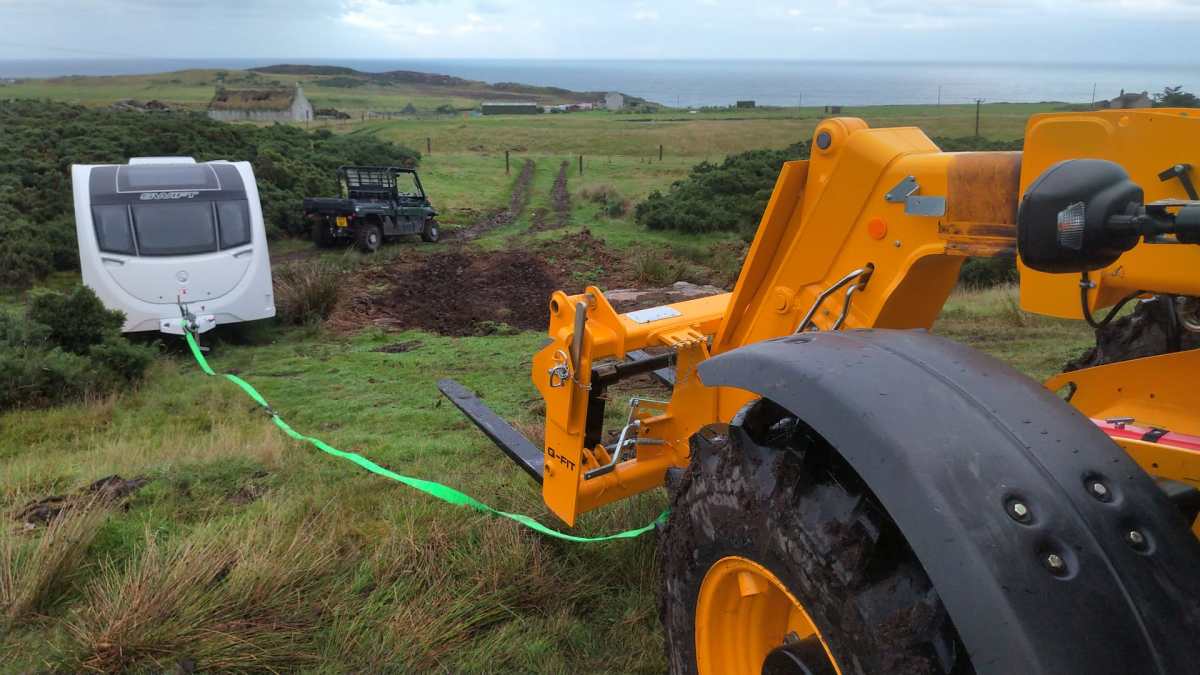
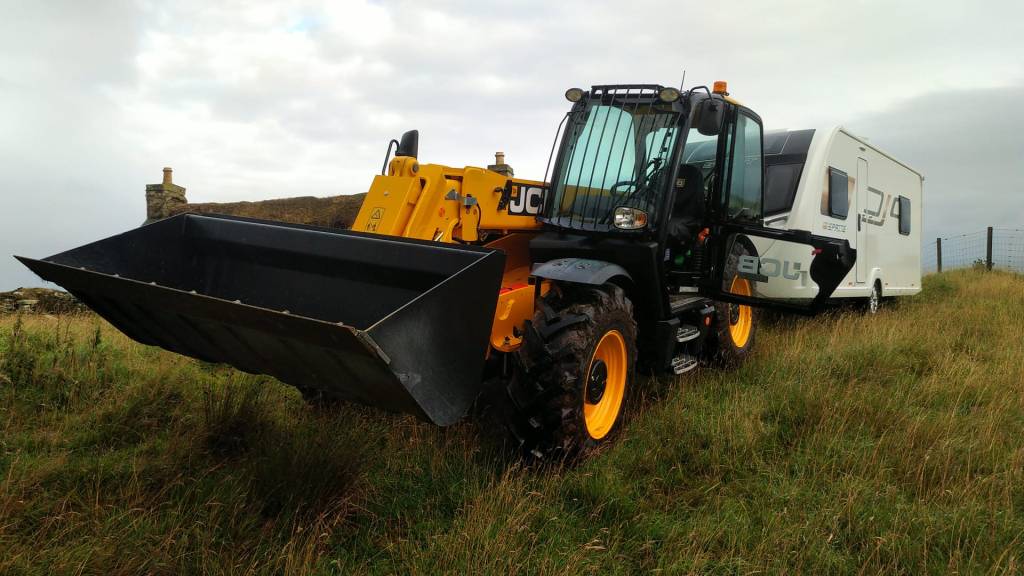
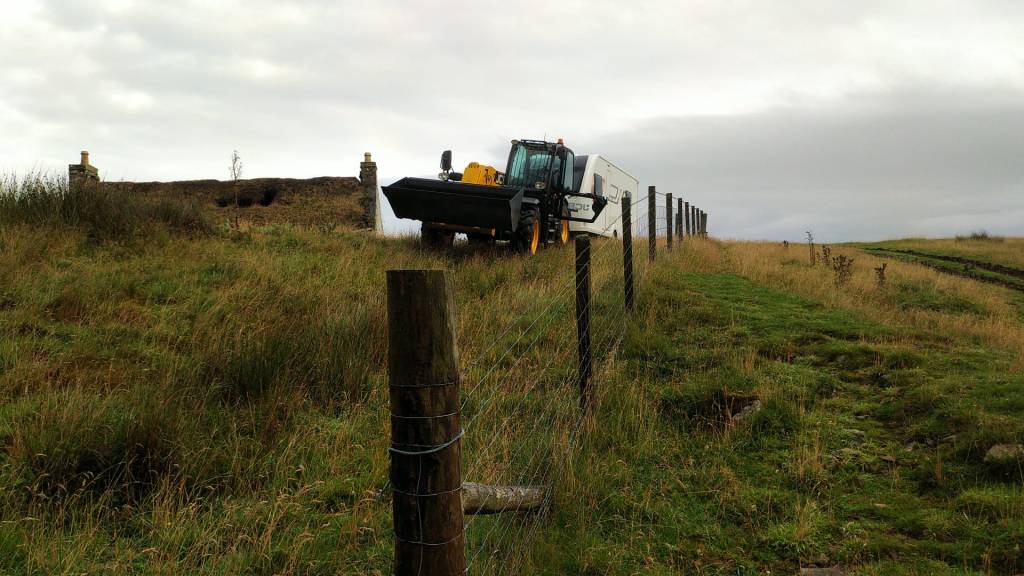
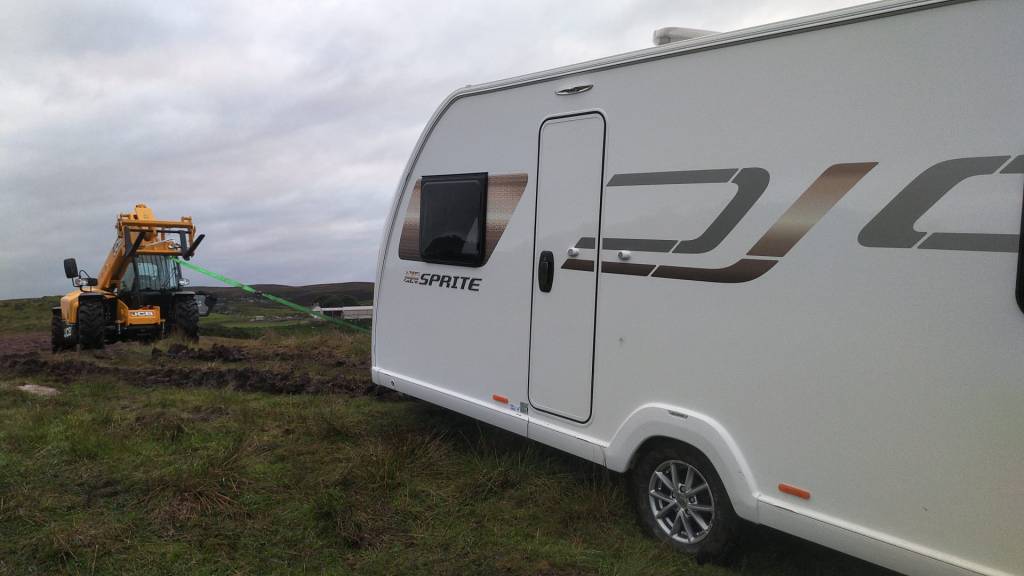
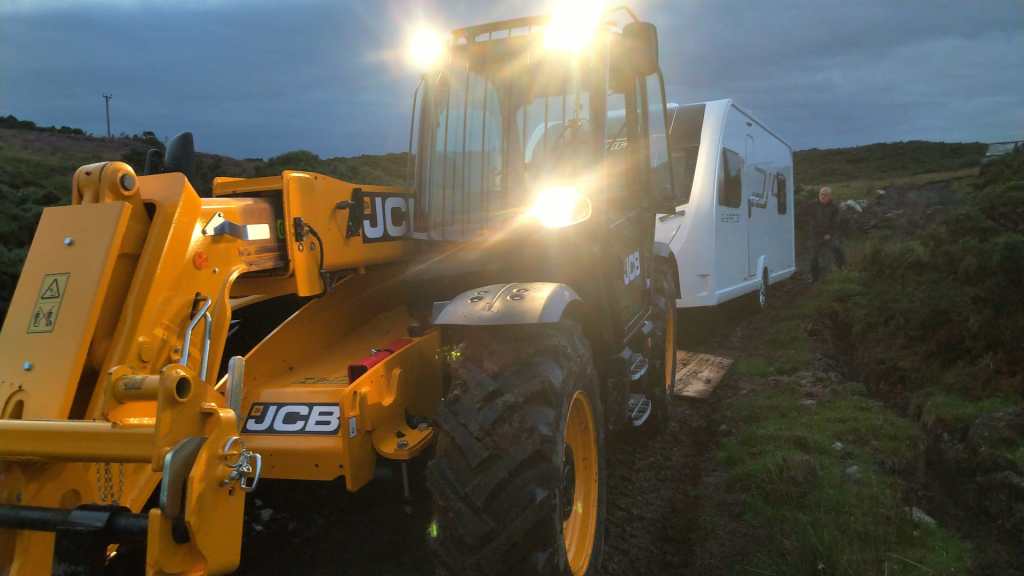
Due to heavy rains in the last couple of days, the whole track was pretty soaked, so we had to use the TeleHandler to pull the caravan. However, the 50mm ball -hitch on the Tele was way to high for the caravan (ca 65cm above the ground), so the effective ground clearance of the caravan was even less (actually less than 10 cm).

I really did not find to take many pictures and videos (too occupied with the whole operation). But you might get at least some impressions of the undertaking.

The bginning of the journey
Plenty of ground clearance
Steeper than it looks
After the fence we have to turn left onto the ramp
Not only steep downwards but also steep sidways
Who needs a whinch?
Already getting dark – the final meters
Arrived at destination

Though we used plywood at the bottom the caravan still got some scratches at the rear. But still in one piece.

We will probably wait, before we move it next time …

Updates on the plot

It has been a while since I last wrote about what has been going on the plot. And actually, something has happened.

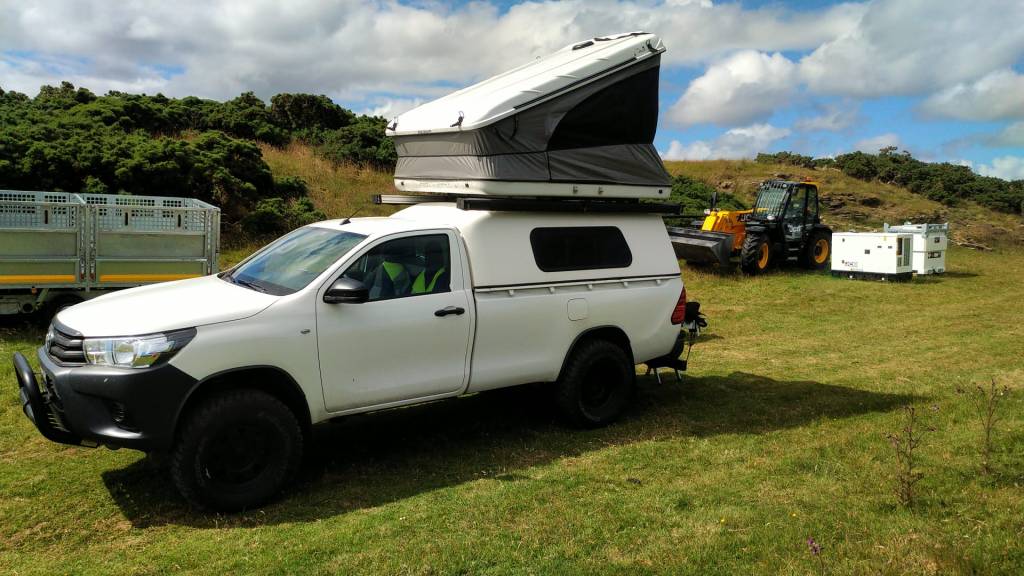
Still with Toyota, trailer and telehandler

Let me briefly explain where we currently stand and maybe I find time to to dive in to details in additional posts.

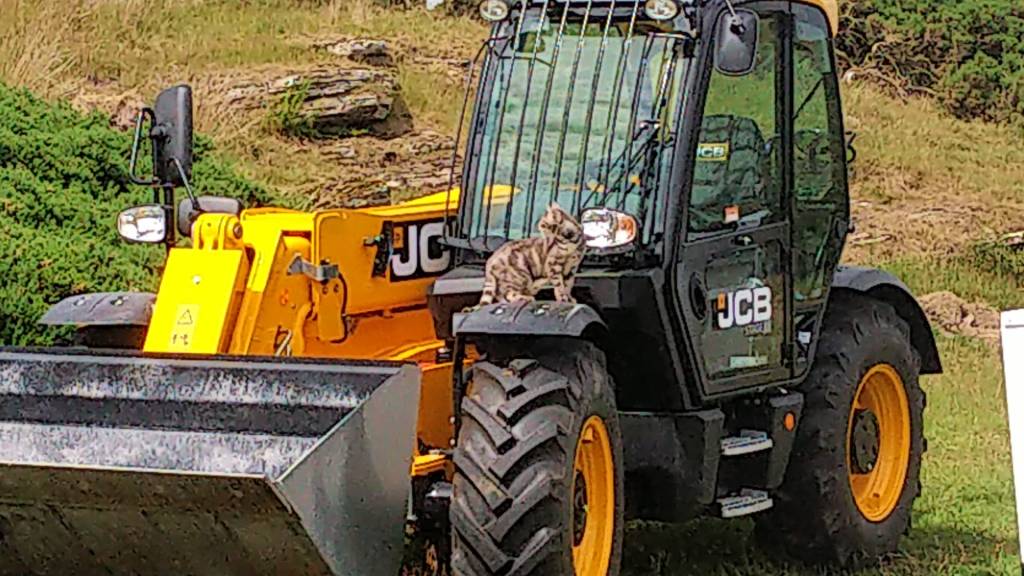
Even the cat likes the telehandler

So what happened?

  1. We got our Telehandler, the JCB 531-70; so we are now able to do some heavy lifting and more …
    Quick note: And yet with this delivery not everything went smoothly, as the brand new machine was not working completely as expected. But we now have a new local technician from Latheronwheel who is very kind and helpful.
  2. The digger finally got fixed. We now even have a quick-hitch, which seem to be not so “quick” (but that is a different story). We were even able to fix a loose track on the excavator. It is easy once you know …
  3. We also now have a 3.5t 13ft tipping-trailer with which we are able to bring more stuff to the plot (such as concrete, gravel – more on this later).
  4. We fixed more parts of our track to the plot (by adding stones to the ground and putting gravel on top of it). This is only a temporary fix, as the ground is still way to weak to hold the weight of the 7t Telehandler or a fully loaded trailer.
  5. We even now a diesel tank from which we can fuel our vehicles and machinery. And refilling it on the main road is as easy as lifting it with the forks of the Telehandler.
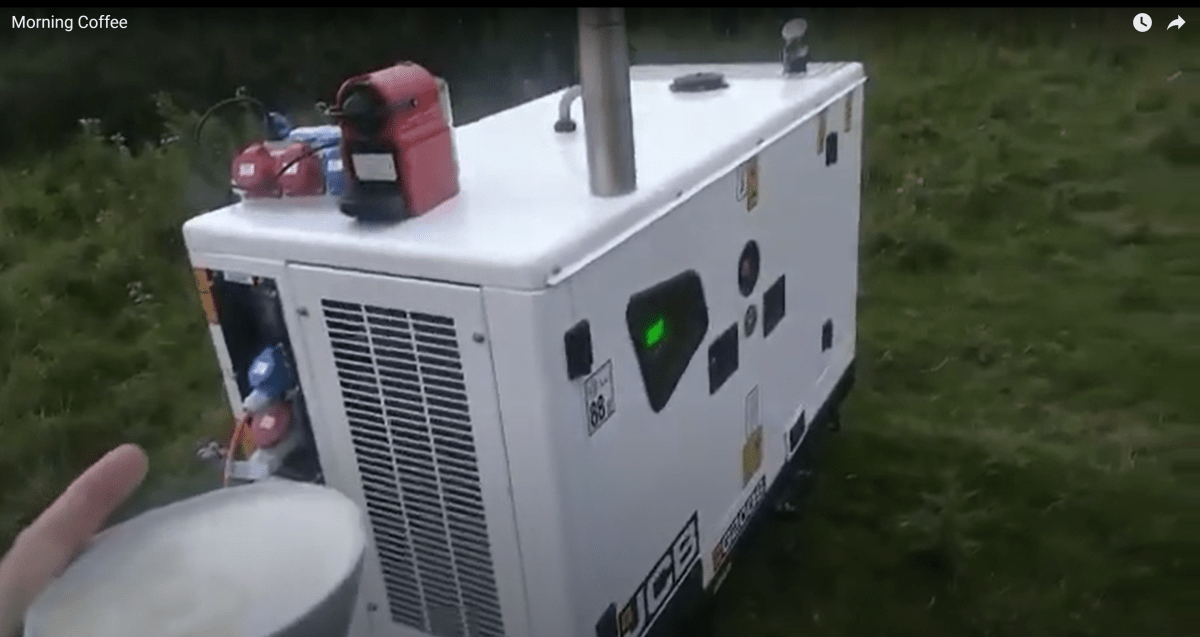
  6. Electricity is now much easier as we can run on a generator as long as we have not finished the turibine/battery set up. As the generator runs on diesel we can refill it from the same diesel tank as everything else.
  7. We discovered a quarry on our plot (which has not been used for probably more than 100 years. I have 2 raw short video sequences (no voice, just walking aroung) that are linked below to get a first impression. As you can see, we had to cut through a lot of gorse to actually get there. The only reason I found out that there is a quarry was, that I saw it on some older maps from the scottish national library archive. There is still some work to get done to easily access the quarry or to get some stones from it. But the good news is, that we now would not have to transport that much amount of stones from a different quarry further away.
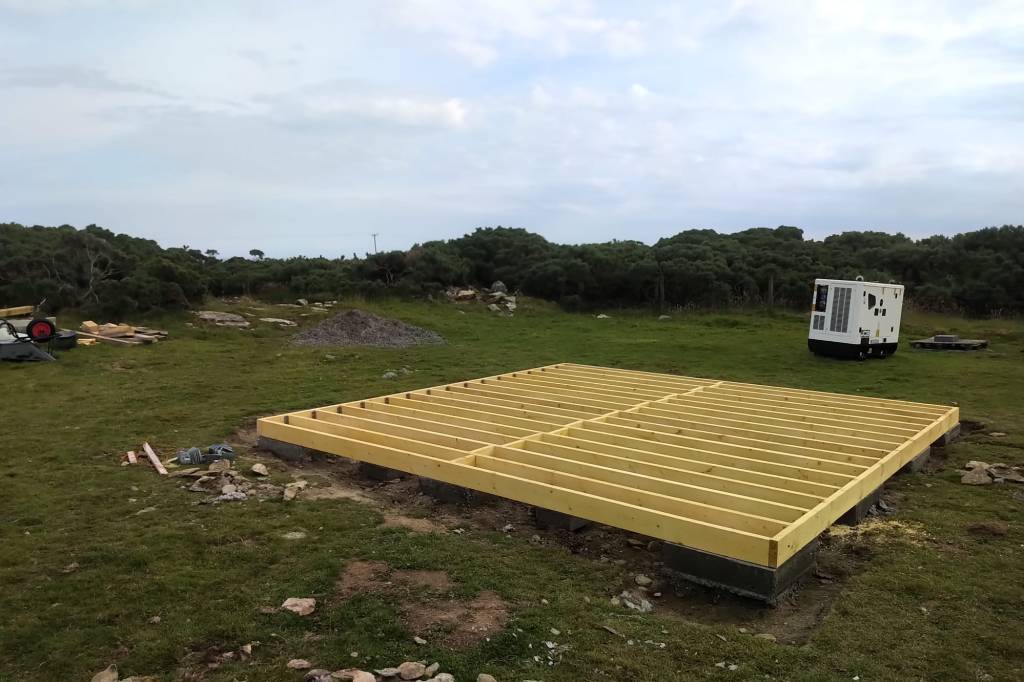
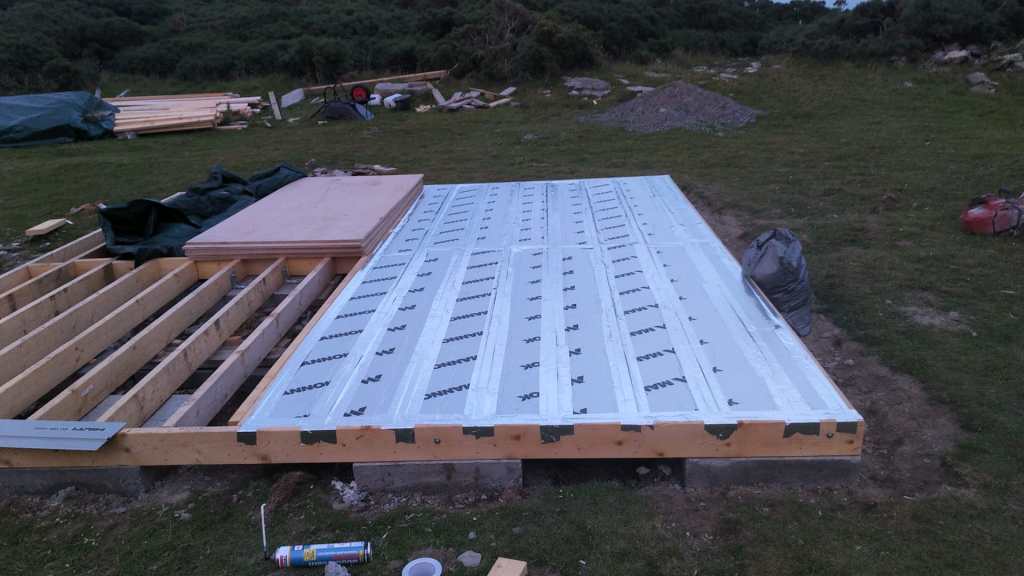
  8. We actually started with our shed; i.e. we did the foundation by pouring concrete for 12 pads and nearly finished the floor insulation. That actually means that the wood *finally* arrived (more than 3 months). Next time I buy the wood somewhere else and not at the Sutherland woodyard in Wick (and yes, I would link a website if they had one).
  9. Planning permission for entrance from the A99 and the barn is still under consideration (*everything* in the Highlands justs takes looonger).
  10. I got myself a pocket calculator Construction Master Pro Trig from “Calculated Industries” to at as a babel fish between the “imperial” surrounding and my “metric” mind. Now I know that 2″ 7/8 are roughly 73mm – so good!
  11. We cut away even more gorse (and still have to wait until autumn to be able to burn it).
  12. I finally admitted to myself that I will have to do a monthly trip to Inverness to be able to buy the stuff I need (the cowboys riding to the city). And here the trailer really comes in handy!
    Side note: and it was actually in Inverness where I got the scaffolding poles for the turbine. No way for me to get them in Wick.
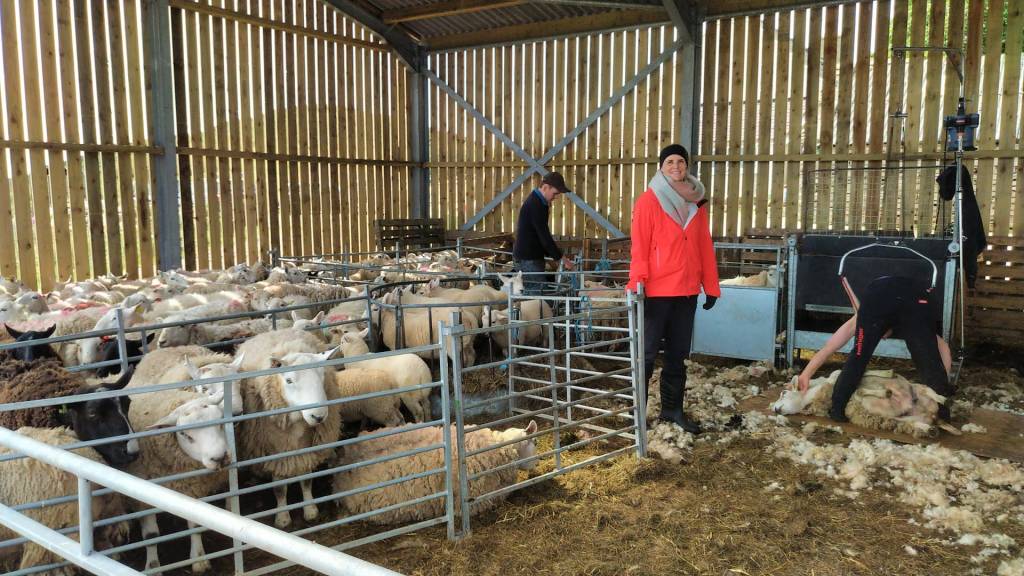
  13. We did some sheep shearing support – first step in becoming real crofters …
Sheep shearing
Shearing sheep

So why am I writing all this? Is everything solved? Far from that.

I am probably more of writing this to remind me that though it seems that nothing really proceeds as planned and barely no progress is visible, some things are still getting done. So there is actually progress (however small it is).

Shedland

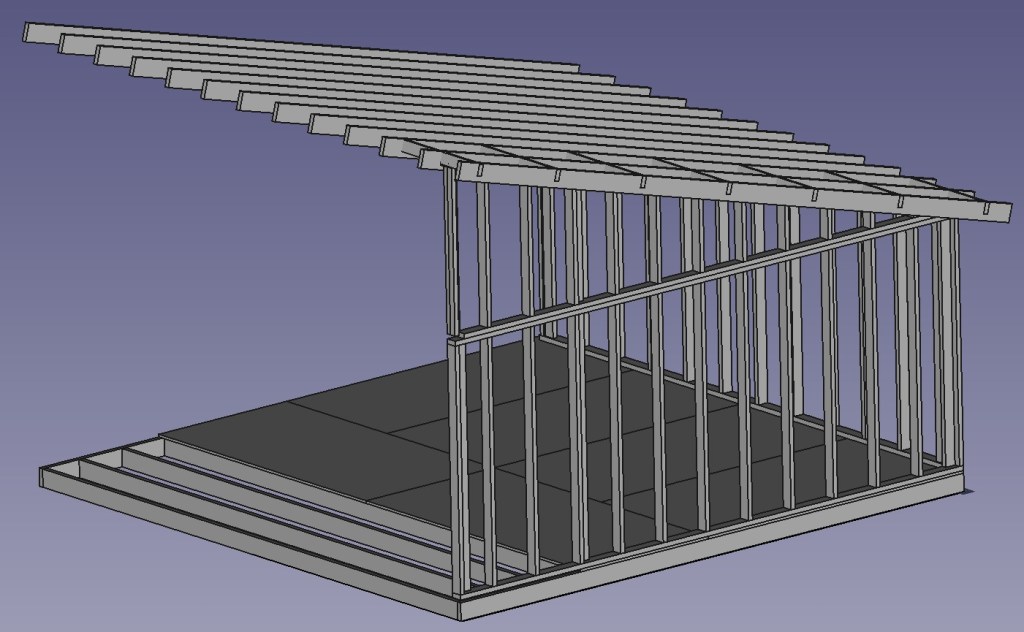
Shed plan
Floor frame
Insulation

Quarry videos

Way from quarry to rabbit run 1/2
Way from quarry to rabbit run 2/2